The Woman Who Kept Almost Making It — And Why That Made Her Indispensable to the People Who Did
Photo: NASA photo in public domain, Public domain, via Wikimedia Commons
There's a particular kind of knowledge that only comes from almost. Not from succeeding, and not from failing early and walking away — but from getting close enough to touch the thing you want most, repeatedly, and then watching it recede. It's a knowledge most people would rather not acquire. Dr. Renata Solís acquired it four times over, and then spent the next three decades turning it into something extraordinary.
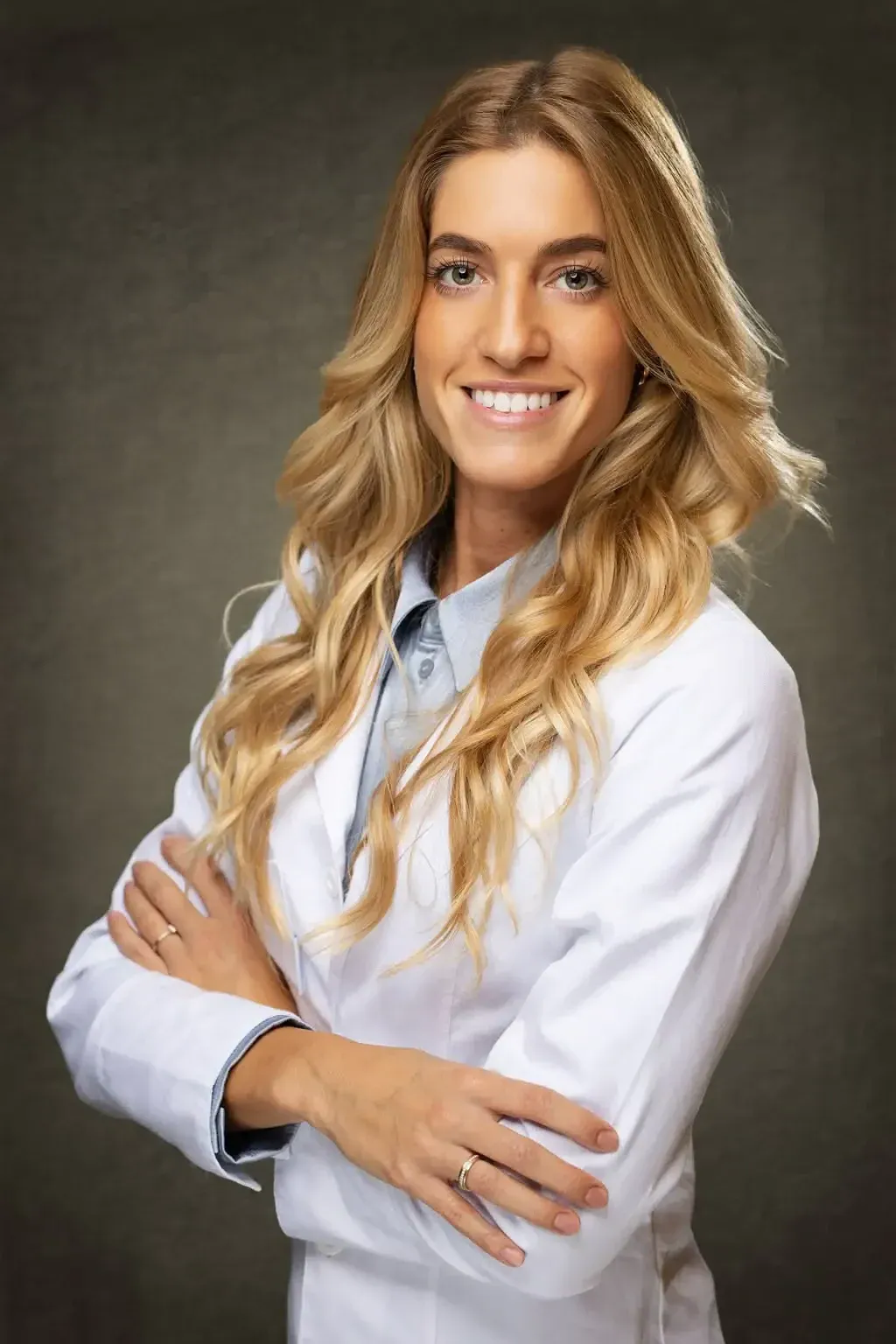 Photo: Dr. Renata Solís, via hallermedical.hu
Solís first applied to NASA's astronaut selection program in 1987. She was thirty-one, a former Air Force pilot with a master's degree in aerospace engineering and a record that, by almost any measure, should have been competitive. She made it to the final selection round. She did not make the cut.
She applied again in 1990. Again in 1994. Again in 1998.
Four applications. Four trips through one of the most rigorous human evaluation processes on earth. Four times, the answer came back no.
What she did next is the story worth telling.
Close Enough to See Everything
The selection process for NASA astronauts is, by design, extraordinarily comprehensive. Candidates are evaluated across physical fitness, technical expertise, psychological resilience, group dynamics, leadership under pressure, and a dozen other dimensions. Making it to the final rounds — as Solís did, each time — means being subjected to that scrutiny in exhaustive detail.
Most people who go through that process once come away shaken. Solís went through it four times, and each time she got further, she was evaluated more deeply and given more substantive feedback. She began to understand the selection criteria not as an applicant trying to clear a bar, but as a student of human performance trying to understand what the bar was actually measuring.
"By the third time, I wasn't just trying to pass," she told a conference audience in 2004. "I was trying to understand what they were actually looking for — and why. And I started realizing that what they were looking for was something much more interesting than any single skill."
What NASA was looking for, she concluded, was a specific kind of psychological architecture: the ability to make high-quality decisions under conditions of extreme stress, incomplete information, physical degradation, and social isolation. Not just competence under pressure, but a particular kind of adaptive cognition that could maintain clarity when every instinct in the human brain was screaming to panic or freeze.
Solís had that architecture herself — she knew it, and she believed the selection panels knew it too. The reasons she was passed over, she eventually came to understand, had more to do with the specific mission profiles NASA was building crews for than with any deficiency in her profile. That understanding didn't make the rejections easier to absorb. But it gave her something to do with them.
Building the Field Nobody Had Built
After her fourth rejection in 1998, Solís made a decision that surprised people who knew her. Instead of pivoting away from the space program, she moved toward it — sideways.
She had spent more than a decade studying the psychological dimensions of astronaut selection, initially as a form of self-improvement and increasingly as genuine research. She had read everything published on human performance in extreme environments, consulted informally with researchers at the Johnson Space Center, and developed a framework for thinking about emergency decision-making that was grounded in both aerospace engineering and cognitive psychology.
She enrolled in a doctoral program in human factors psychology at the University of Houston. Her dissertation examined decision-making degradation in simulated spacecraft emergency scenarios. It was, her dissertation committee noted, among the most practically rigorous pieces of research they had evaluated in years.
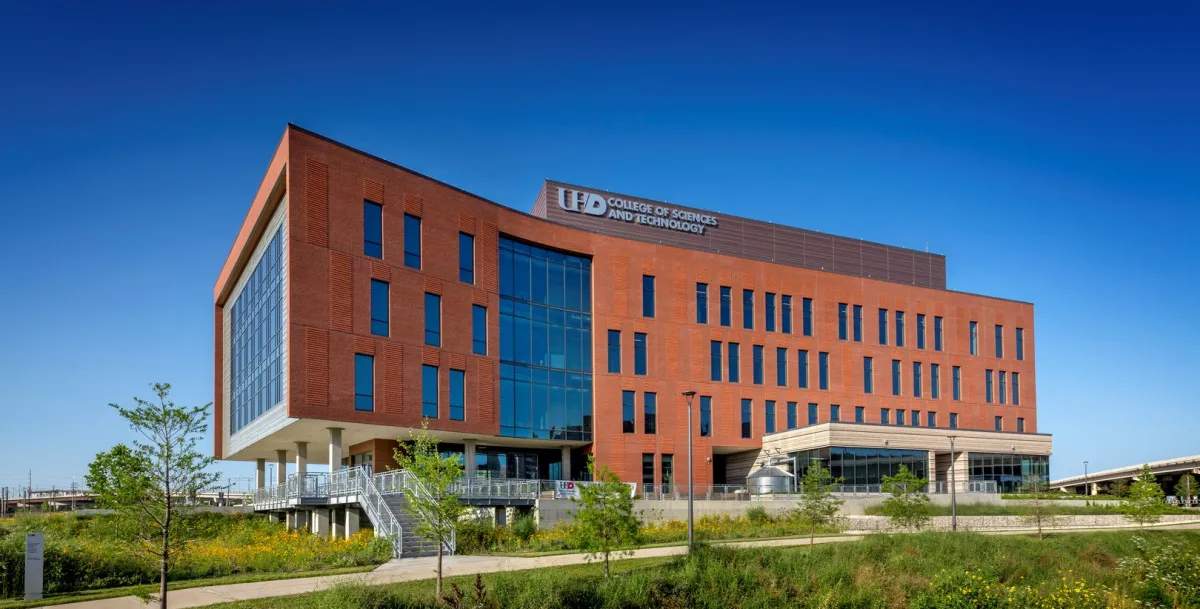 Photo: University of Houston, via deq0lwah6h8rm.cloudfront.net
By 2002, she had joined the faculty at a research institute affiliated with Johnson Space Center and begun developing what would become the most comprehensive astronaut survival psychology curriculum in the country.
What Rejection Teaches That Success Cannot
There's a straightforward reason why Solís became so good at what she did, and she has been direct about naming it.
She understood failure — specifically, she understood the experience of being highly prepared and still coming up short — in a way that no one who had sailed through selection could fully replicate. That experience gave her an unusually precise map of the gap between preparation and performance, between what a person knows and what they can access when their nervous system is in crisis.
Astronauts who trained with her over the years have described her sessions in terms that go beyond technical instruction. She didn't just teach emergency protocols. She taught them how to stay cognitively available to themselves when everything in their environment was designed to shut that availability down. She taught them to recognize the specific ways that stress corrupts decision-making — the tunnel vision, the sunk-cost paralysis, the social deference that leads crews to follow a wrong call because challenging it feels too costly.
She knew those failure modes intimately, not from textbooks but from having sat in rooms where extraordinary pressure was applied to her own mind and watched herself navigate it, imperfectly, repeatedly, over more than a decade.
"I learned more from not making it than I ever would have learned from making it," she said in a 2011 interview. "If I'd been selected in 1987, I would have gone to space, come back, and maybe taught a module somewhere. Instead, I spent fifteen years obsessively studying what it takes to survive the thing I couldn't quite reach. That's a different kind of education."
The Curriculum That Changed the Field
By the mid-2000s, Solís had developed a training framework that was being used not just by NASA but by military special operations units, emergency medicine programs, and high-stakes corporate risk teams. The core of it — decision-making architecture under extreme stress — turned out to be applicable wherever human beings were asked to perform in conditions that pushed against the limits of their cognitive capacity.
She has trained astronauts who have walked in space, surgeons who have operated in disaster zones, and pilots who have managed catastrophic in-flight failures. None of them got there the way she almost did. But all of them, in some way, were shaped by what she built from the rubble of four near-misses.
The closest Renata Solís ever got to space was a simulator at Johnson Space Center, where she spent years watching other people prepare for the thing she'd spent a decade preparing for herself. It would be easy to read that as a tragedy. She doesn't read it that way, and neither should we.
Some knowledge only lives on the near side of the door. And the people who stand there long enough, paying close enough attention, sometimes end up knowing more about what's inside than anyone who ever walked through.