Hollow Boy: The Backwoods Kid Who Flew Faster Than Anyone Thought Possible

On the morning of October 14, 1947, a young man from Hamlin, West Virginia climbed into a small, bullet-shaped aircraft over the Mojave Desert with two broken ribs he hadn't bothered to report. A few minutes later, he crossed a threshold that some of the finest aeronautical minds in the world had quietly started to believe was uncrossable. Chuck Yeager didn't break the sound barrier because he was the most educated man in the room. He broke it, in part, because he was the least.
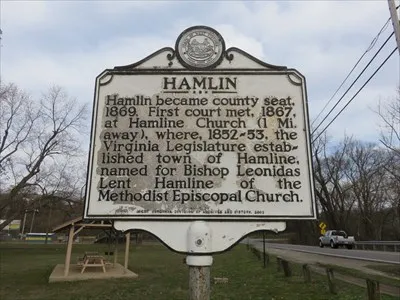 Photo: Hamlin, West Virginia, via img.geocaching.com
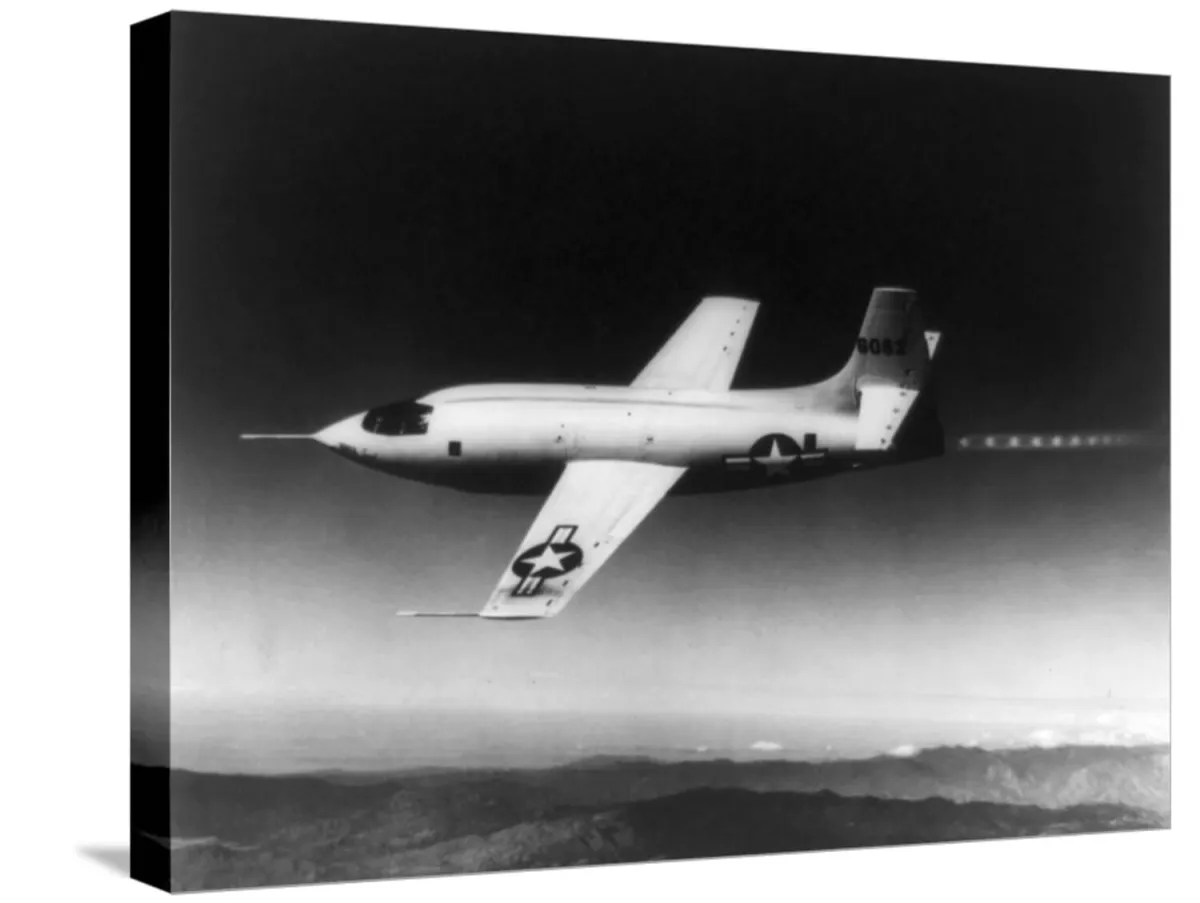 Photo: Chuck Yeager, via i5.walmartimages.com
Where He Came From
Hamlin sits in Lincoln County, West Virginia, tucked into what locals call a hollow — a narrow valley carved between steep, forested ridges. In the 1920s and 30s, it was the kind of place that didn't produce famous people. It produced hunters, miners, and men who knew how to keep aging machinery alive through sheer intuition and stubbornness.
Yeager was one of those men in the making. As a boy, he helped his father operate a natural gas drilling rig, learning to listen to engines the way some kids learn to read — slowly at first, then fluently. He stripped water pumps, fixed farm equipment, and hunted squirrels in the hills above town not as a hobby but as a contribution to the family table. There was no aviation club at his school, no physics tutor, no mentor pointing him toward the sky. There was just a kid with an extraordinary mechanical instinct and nowhere obvious to put it.
When he enlisted in the Army Air Corps in 1941, Yeager initially signed up as a mechanic — not a pilot. He was eighteen, had a high school diploma, and zero flight hours. The military's own rules at the time technically barred enlisted men without college education from flight training. What changed his trajectory was a wartime pilot shortage and a single test flight that revealed what his hands already knew: he could feel an airplane.
The Education Nobody Counted
Here's what gets lost in most retellings of the Yeager story. The men competing for the sound barrier assignment in 1947 included some of the most rigorously trained pilots and engineers in the country. Several had advanced degrees. Many had studied the theoretical aerodynamics of transonic flight. And many of them, frankly, were scared — not irrationally, but based on solid data. Aircraft approaching Mach 1 experienced violent buffeting, control reversal, and behaviors that existing flight theory couldn't fully explain. A number of test pilots had died chasing that edge.
Yeager's advantage wasn't bravery in the Hollywood sense. It was something closer to mechanical empathy. His chief test pilot supervisor, Jack Ridley, once noted that Yeager could describe what a plane was doing in physical, tactile terms that engineers found almost impossibly useful — not because he had the vocabulary of a scientist, but because he felt the aircraft as an extension of his body in a way that more analytically trained pilots sometimes didn't.
Growing up fixing things that broke in expensive and unpredictable ways had given him a diagnostic mind. He didn't panic when systems misbehaved; he listened harder. That instinct, built in a West Virginia hollow with no runway in sight, was the exact quality the sound barrier demanded.
The Morning It Happened
Two nights before the scheduled flight, Yeager fell from a horse and cracked two ribs. He told a local doctor — not the base physician, who would have grounded him — got taped up, and said nothing to his superiors. On the morning of the flight, he couldn't raise his right arm high enough to seal the cockpit hatch from the inside. Ridley quietly fashioned a makeshift lever from a broom handle so Yeager could do it one-handed.
The Bell X-1, painted bright orange and named Glamorous Glennis after his wife, dropped from the belly of a B-29 at 20,000 feet. Yeager lit the rocket engine and climbed. At around 40,000 feet, traveling at Mach 0.96, the controls began to feel strange — the familiar shudder and instability that had rattled so many pilots before him. He didn't pull back. He made a small adjustment to the tail stabilizer — a solution he and Ridley had quietly theorized beforehand — and the buffeting smoothed out.
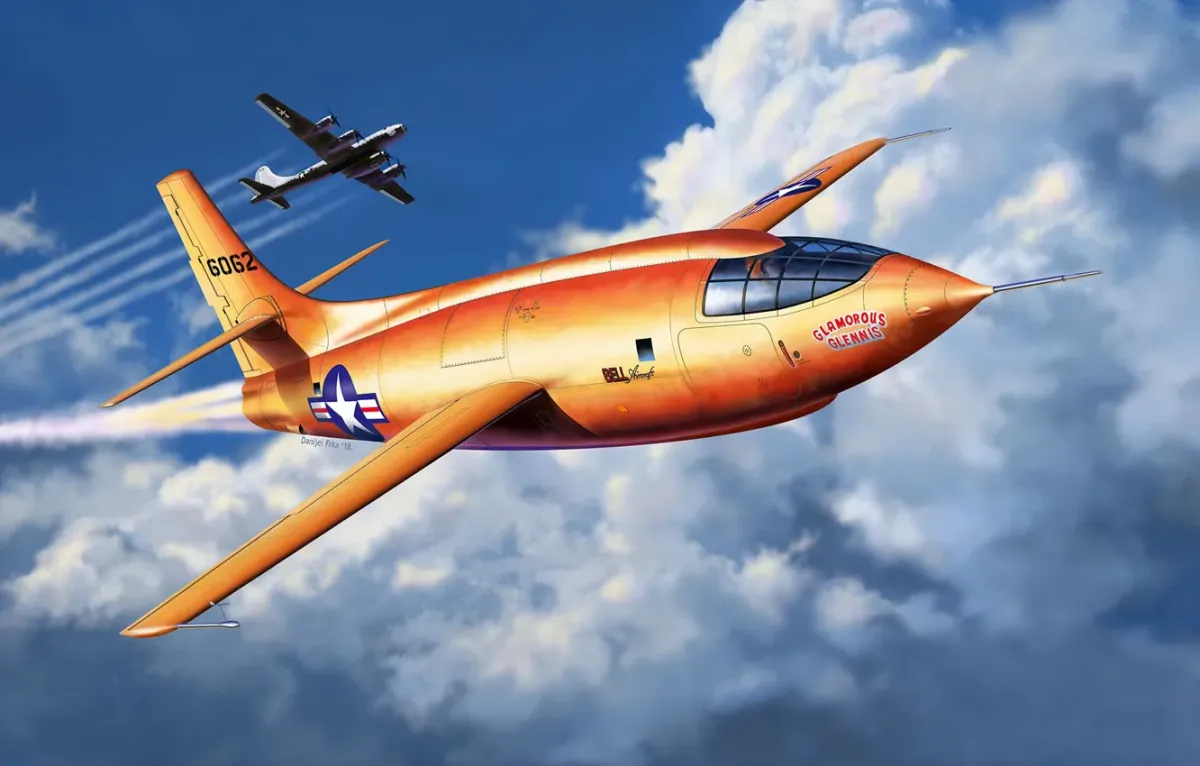 Photo: Bell X-1, via img5.goodfon.com
The needle touched Mach 1.06. The sonic boom rolled across the desert floor below. The men on the ground heard it before they understood what it meant.
Yeager landed, climbed out, and reportedly went to a nearby diner for breakfast.
What Ordinary Actually Means
The word 'ordinary' gets used about Yeager a lot, usually as a setup for how extraordinary he became. But that framing misses something. His background wasn't a handicap he overcame — it was a curriculum. The hollow taught him mechanical intuition. The hunting taught him patience and precision under pressure. The absence of formal aeronautical training meant he never learned to be as afraid of the unknown as the people who had studied it most carefully.
There's a version of Chuck Yeager's story that treats his West Virginia roots as charming backstory, local color before the real narrative begins. The truer version recognizes that Hamlin, West Virginia was the preparation. The rig, the water pumps, the squirrel rifle — these were the flight school that no flight school knew how to replicate.
He went on to log more than 10,000 hours in over 330 aircraft types. He commanded fighter squadrons, trained astronaut candidates, and consulted with the Air Force well into his eighties. But the moment that defined him happened because a boy who grew up with nothing but his hands and his instincts turned out to be exactly the right person to do the thing that everyone else had decided was probably impossible.
Some preparations don't look like preparation at all — until suddenly they do.