Reading the Room Without Reading the Words: The Dropout Who Became the CIA's Secret Weapon
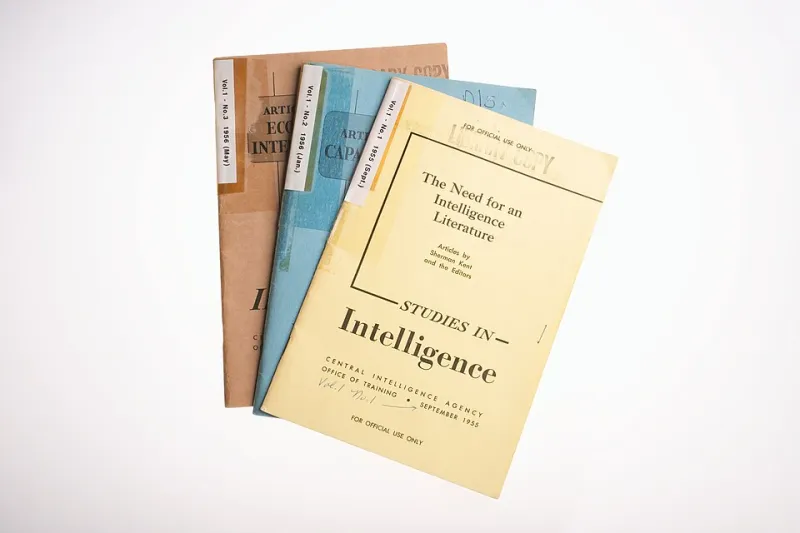
Photo: The Central Intelligence Agency, Public domain, via Wikimedia Commons
Reading the Room Without Reading the Words: The Dropout Who Became the CIA's Secret Weapon
There's a particular kind of humiliation that follows a person through a system built entirely around their weakness. For Marcus Doyle — a kid from Knoxville, Tennessee, who couldn't reliably spell his own middle name until he was seventeen — that system was school. Every version of it. And then, eventually, the kind of school that shapes the people who protect the country.
 Photo: Knoxville, Tennessee, via www.guideoftheworld.com
He was dismissed from his first college program after two semesters. The second program lasted a little longer, mostly because he charmed an advisor into giving him extensions he ultimately couldn't use. The third dismissal came from a government training program that evaluated candidates for analytical roles in federal agencies. The evaluators noted, not unkindly, that his written work was "inconsistent" and his processing of text-heavy briefings was "below operational threshold." In plain English: they thought his brain wasn't built for the job.
They were wrong. Just not in the way anyone expected.
The Part Nobody Measured
Dyslexia, in its most common framing, is a reading problem. That's how schools describe it, how HR departments quietly flag it, and how most institutions decide what to do with the people who have it. What that framing misses — what it almost always misses — is what the brain is doing instead.
Doyle had spent his entire childhood compensating. Without reliable access to the written word, he had become, almost without realizing it, a ferocious reader of everything else. Patterns in behavior. Inconsistencies in tone. The gap between what a situation looked like on the surface and what the underlying structure suggested was actually happening. His brain had essentially been forced to develop a secondary intelligence — one built not on linear text processing but on spatial and relational pattern recognition.
He couldn't always tell you what the briefing said. But he could often tell you what it meant before the briefing was finished.
He found his way into the CIA not through the front door but through something closer to a side window. A contact — a former Army intelligence officer who had worked with Doyle on a short-term government contract — made an informal introduction to a senior analyst who was, at the time, quietly frustrated with the agency's existing approach to geopolitical threat assessment. The dominant methodology was heavily document-driven: analysts read, cross-referenced, and summarized vast quantities of written intelligence. It was rigorous. It was also, the senior analyst suspected, missing something.
Doyle came in for what was described as an informal consultation. He stayed for over two decades.
A Different Kind of Map
What Doyle eventually developed — with institutional support that came slowly and skeptically — was an approach to threat analysis that prioritized behavioral pattern mapping over document synthesis. Instead of building assessments from the written record upward, he worked from observable behavioral signals outward: troop movements, resource allocation patterns, communication frequency shifts, the timing of public statements relative to private actions.
It sounds, described that way, like something the agency might have been doing already. In some respects it was. The difference was in the weighting. Doyle's framework treated behavioral inconsistency as the primary signal and documentary evidence as the secondary confirmation. Most existing models worked in the opposite direction. The shift was subtle but, in practice, significant — particularly in cases where adversarial actors were actively managing their documentary footprint.
The approach proved especially effective in contexts where conventional analytical methods had repeatedly underperformed: regions with high disinformation output, scenarios involving non-state actors who left limited written trails, and situations where the gap between official communications and ground-level behavior was the most important data point in the room.
Colleagues who were initially skeptical — and there were many — came around slowly, usually after a specific incident where Doyle's read on a situation proved accurate while the document-heavy consensus had missed the turn. It didn't make him universally popular. Institutions don't love being shown a different way to do things they've been doing for decades. But it made him indispensable.
What the System Almost Threw Away
Doyle has spoken publicly about his experience only a handful of times, and always with a kind of careful restraint that suggests he's aware of how the story can be flattened into something inspirational-poster simple. He doesn't present his dyslexia as a gift, exactly. He's said, more than once, that he wouldn't wish his early academic experience on anyone. The humiliation was real. The doors that closed were real. The years of being made to feel like a processing error in a system designed for other kinds of minds — those were real too.
But he does say something that stays with you. He says that the intelligence community, for all its sophistication, had been built — like most institutions — to reward the skills that formal education selects for. And that formal education, almost by definition, screens out the kinds of minds that had to develop alternative routes to understanding.
He's not the first person to notice this. Researchers studying dyslexia have documented elevated rates of the condition among entrepreneurs, architects, surgeons, and — interestingly — certain categories of military and intelligence professionals. The hypothesis isn't that dyslexia causes success. It's that the compensatory strategies dyslexic individuals develop, often under significant social pressure and without institutional support, can produce cognitive capabilities that standard evaluation processes never think to look for.
Doyle's career is a particularly vivid case study in what that looks like when the right person finally ends up in the right room.
The Credential Gap
He retired with more commendations than most people who entered the agency through the conventional path accumulate in a career. The irony isn't lost on him. The same system that turned him away three times eventually gave him its highest analytical honors.
What he talks about now — in the rare interviews he gives, usually to academic researchers studying cognitive diversity in high-performance environments — is the pipeline problem. How many people with exactly his kind of mind never found the side window? How many were told, clearly and repeatedly, that the way their brain worked was a liability, and believed it?
The credential gap in American institutions runs deep. It rewards the skills it knows how to measure and discards the ones it doesn't. Doyle's story doesn't solve that problem. But it does put a very specific, very human face on the cost of it.
The spy who couldn't spell turned out to be better at reading the world than almost anyone around him. The only system that failed was the one that almost never let him try.