Not the End: Seven Americans Who Got the Diagnosis Everyone Assumed Was Their Last Chapter

Photo: P. C. Skovgaard, Public domain, via Wikimedia Commons
There's a particular silence that follows a serious diagnosis. The kind that fills a room when a doctor finishes speaking and looks at you across a desk. For most people, that silence is the loudest thing they've ever heard.
What happens next is different for everyone. Some people withdraw. Some fight. Some do both. And some — a specific, remarkable category of people — seem to find in that silence something that looks almost like permission. Permission to stop waiting. To stop hedging. To finally do the thing they'd been circling for years.
These are seven of those people. Their diagnoses were real and their obstacles were serious. What they did afterward was more serious still.
1. The Painter Who Started Losing Her Sight and Finally Found Her Vision
Eleanor Myles had been a working commercial illustrator in Chicago for most of her adult life — skilled, reliable, and, by her own later admission, almost entirely safe. She took the assignments that paid. She didn't take many risks. Her work was competent in the way that a lot of professional creative work is competent: technically accomplished and emotionally inert.
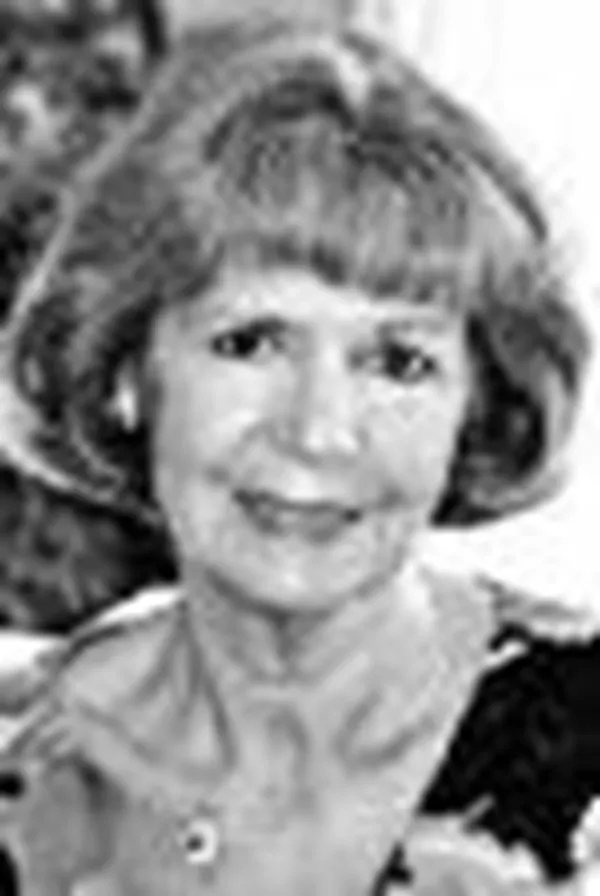 Photo: Eleanor Myles, via cache.legacy.net
At fifty-three, she was diagnosed with macular degeneration, a progressive condition that attacks central vision. Her ophthalmologist was honest with her: she would likely lose enough of her sight within a few years to make detailed illustration work impossible.
She spent about six months in what she later described as a controlled panic. And then she started painting differently. Without the ability to rely on fine detail, she moved toward large-scale abstract work — canvases that operated on color, shape, and emotional mass rather than precision. She stopped working commercially and started working for herself, for the first time in thirty years.
The work she produced in the eight years following her diagnosis was exhibited in galleries from New York to San Francisco. Critics who had never written about her commercial career wrote extensively about her fine art. She has said, in interviews, that the diagnosis forced her to stop hiding inside technical skill and actually say something.
She was right. The work says it loudly.
2. The Pitcher Who Came Back From a Dead Arm and Rewrote the Rules of Recovery
Jamie Cortez was twenty-eight years old when team doctors confirmed what he'd been quietly suspecting for a season and a half: the ligament damage in his throwing arm was severe enough to require reconstructive surgery. The prognosis was delivered with the careful optimism that sports medicine professionals use when they're not sure you're coming back.
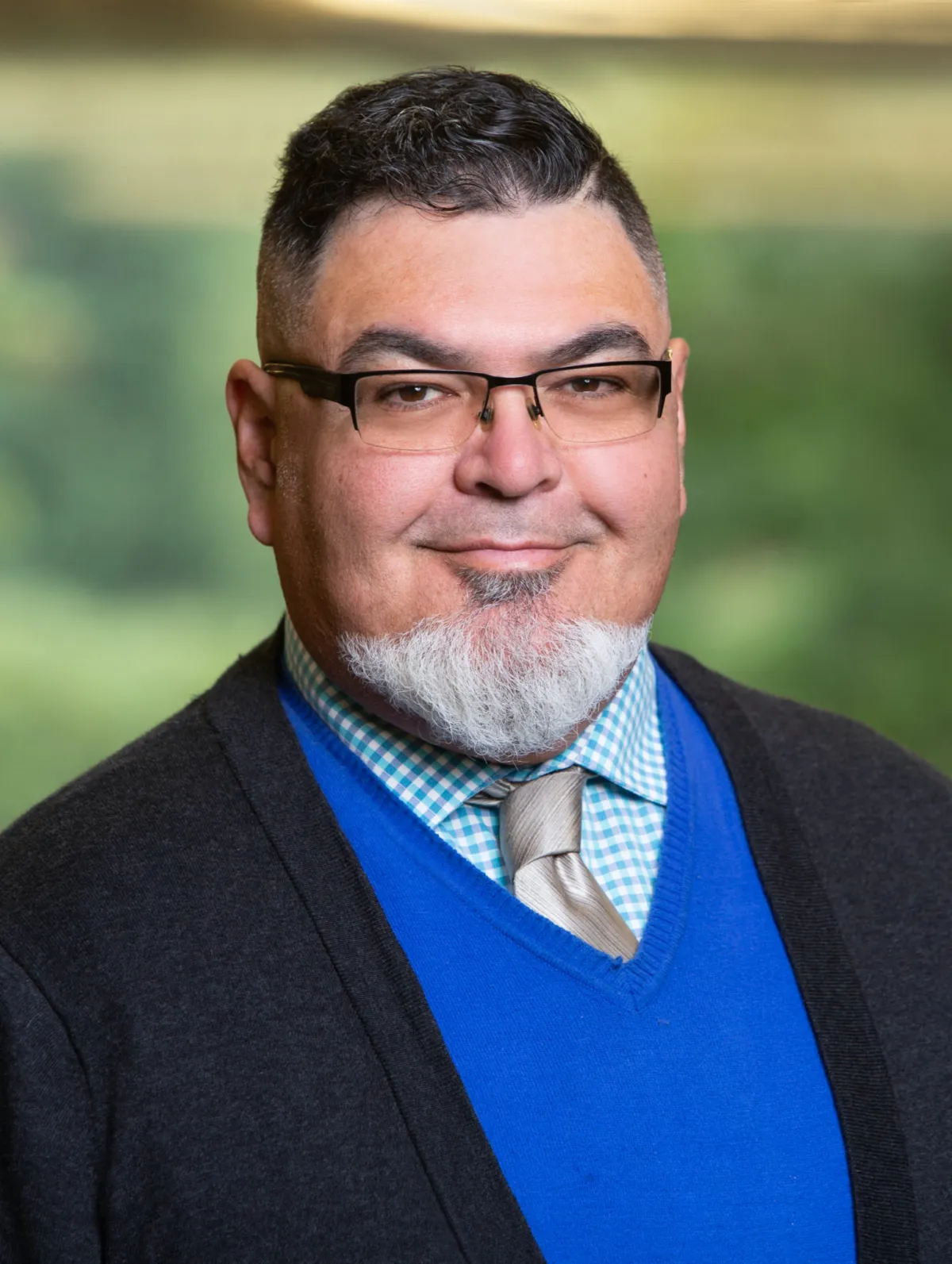 Photo: Jamie Cortez, via s26162.pcdn.co
The surgery and recovery took nearly two years. During that time, Cortez — unable to throw and with significant time on his hands — became obsessive about the science of athletic recovery in ways that went well beyond his own rehabilitation. He read everything he could find. He connected with physical therapists, biomechanics researchers, and strength coaches. He developed, through a combination of his own experience and voracious self-education, a set of recovery and arm-care protocols that challenged several standard practices in professional baseball.
He did return to pitching, though his career lasted only three more seasons. What lasted much longer was the recovery framework he had developed. He spent the following two decades working as a pitching rehabilitation consultant, and the protocols he pioneered — once considered unconventional — have since been adopted by multiple major league organizations.
The dead arm gave him the time to figure out what was killing arms. That turned out to matter more than any season he might have pitched.
3. The Novelist Who Wrote Her Best Book While Losing Her Voice
For a writer, a diagnosis of progressive multiple sclerosis carries a particular cruelty: fatigue, cognitive fog, and the gradual erosion of the physical capacity to work. Sandra Okafor received her diagnosis at forty-one, midway through a career that had produced three modestly successful literary novels and a reputation as a writer of real promise who hadn't quite arrived yet.
 Photo: Sandra Okafor, via yt3.googleusercontent.com
The MS progressed. There were months when she couldn't sit at a desk. She dictated into a recorder. She wrote in fragments. She rewrote more than she ever had before, because her energy was limited and she couldn't afford to waste it on the wrong sentence.
The novel she finished four years after her diagnosis — written in stolen hours and dictated paragraphs and fragments stitched together during remissions — was the book that arrived. It won a major literary prize. It was reviewed in terms she had never previously encountered. Critics pointed to a rawness and precision in the prose that felt unlike her earlier work.
She has a theory about why. She says that when you have unlimited time and energy, you can always revise tomorrow. When you don't, you find out very quickly which sentences you actually mean.
4. The Architect Who Designed His Greatest Building From a Wheelchair
Daniel Ferris had been an architect for twenty-six years when a spinal cord injury from a car accident left him with significant and permanent mobility limitations. His firm had been successful. His work had been widely published. And, in the assessment of several colleagues who spoke honestly about it later, it had also been somewhat conventional — beautiful, but not bold.
The accident changed his relationship to space. Literally. He now moved through the world in ways that revealed architectural failures that his previous embodied experience had never surfaced. Doorways that were technically compliant with accessibility codes but were practically humiliating to navigate. Spatial flows that assumed a particular kind of body. Buildings that were, in ways no one had quite articulated, designed for people who had never had to think about how they moved.
The community center he designed three years after his injury is widely cited as a landmark in accessible design — not because it meets standards, but because it refuses to treat accessibility as a constraint. It treats it as the primary design logic. The building has been studied in architecture schools. It has influenced municipal design guidelines in several cities.
Ferris has said that he needed to lose the ability to take space for granted before he could design space that was genuinely generous. The accident cost him something real. What he built afterward cost others nothing — and gave them everything.
5. The Entrepreneur Who Built Her Biggest Company After a Cancer Diagnosis Changed What She Was Willing to Risk
Rachel Yuen had spent her thirties building and selling two small businesses — both successful, both, in her own retrospective accounting, carefully sized to stay within a range she found manageable. She was, she has said, a person who understood risk intellectually and avoided it personally.
At forty-four, she was diagnosed with breast cancer. The treatment was aggressive and the prognosis was ultimately good. But the eighteen months of treatment and recovery did something to her relationship with caution that she describes as permanent.
The company she launched the year after she finished treatment was, by every measure, larger and more ambitious than anything she had previously attempted. It operated in a market she had studied but never entered. It required capital she had to fight to raise. It failed once, partially, and she rebuilt it. It is now one of the more significant companies in its sector, employs several hundred people, and has generated the kind of returns that make the venture capital community write case studies.
She is asked frequently what changed. Her answer is always the same. She says she stopped being afraid of the things that weren't actually the most frightening thing that could happen to her. Once she knew what that felt like, the rest of the risk landscape looked different.
6. The Composer Who Lost His Hearing and Wrote the Score That Defined His Legacy
Marcus Webb had composed for film and television for nearly two decades when progressive hearing loss — diagnosed in his late forties and advancing faster than his audiologist had initially projected — began to seriously threaten his ability to work in the conventional sense. By his early fifties, he was composing almost entirely from memory, intuition, and a bone-conduction system that gave him a partial and imperfect sense of what he was creating.
The score he completed during this period — for a documentary about the American civil rights movement — is considered by many critics to be the finest work of his career. It is spare in ways his earlier work was not. It trusts silence in ways that composers with full hearing rarely do, because silence, for Webb, had become a presence rather than an absence.
He has given a handful of interviews about the experience. In one of them, he said something that has been quoted widely: that he had spent twenty years composing music for ears, and that losing his hearing had finally forced him to compose music for the chest — for the place where sound actually lands.
7. The Coach Who Turned a Heart Attack Into a Philosophy
When college football coach Gerald Tate suffered a major cardiac event at fifty-seven — collapsing on the practice field in front of his players and staff — the assumption in the athletic department, and in the sports press, was that his coaching career was effectively over. He had pushed hard for decades. The heart attack seemed like the body's final invoice.
He returned to coaching the following season. He also returned fundamentally changed. The practices were shorter. The culture he built in the years after his cardiac event was less focused on grinding and more focused on recovery, mental health, and what he called sustainable excellence. He brought in sports psychologists. He publicly discussed his own vulnerability in ways that were, at the time, unusual for a head coach at his level.
His team won a conference championship two seasons after his heart attack. The players from that era speak about him in terms that go well beyond football. Several have said that the version of him who came back from the cardiac event was a better coach — and a better person — than the one who had collapsed.
He has said he needed to almost lose his life to understand what he was asking his players to risk with theirs.
What the Diagnosis Actually Does
None of these stories are about illness being secretly beneficial. The pain was real. The fear was real. The losses — of physical capacity, of certainty, of the futures people had mapped for themselves — were real.
But there is something that a serious diagnosis does, for some people, that no amount of motivational language can replicate. It removes the option of indefinite postponement. The thing you were going to get around to, the risk you were going to take when conditions were better, the work you were saving for a more appropriate moment — all of that evaporates.
What's left is the question of what you actually want to do with the time you have.
For these seven people, the answer turned out to be the most important work of their lives. The diagnosis didn't give them that work. It just finally got out of the way.