The Counterfeiter Who Couldn't Let Go: How One Man's Art Fraud Became a One-Person Rescue Mission for Forgotten American Folk Art
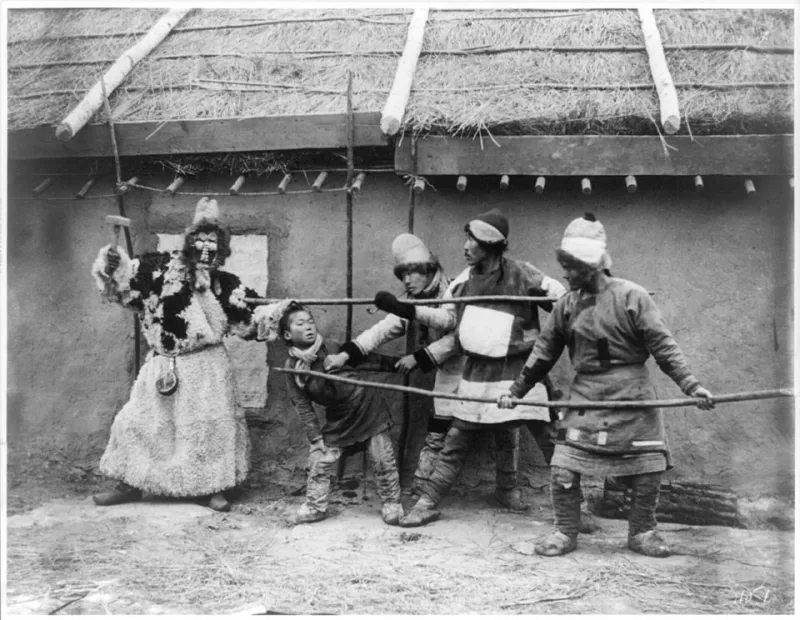
Photo: William Henry Jackson, Public domain, via Wikimedia Commons
The Counterfeiter Who Couldn't Let Go: How One Man's Art Fraud Became a One-Person Rescue Mission for Forgotten American Folk Art
He walked into galleries with stolen paintings and walked out with cash. But somewhere between the forgeries and the felony charges, something strange happened — he fell in love with what he was copying. The museums that once wanted him prosecuted eventually started calling him for advice.
A Criminal Education in American Painting
In the 1950s, a young man named Calvin Doyle McBride — known in certain back-room circles simply as Cal — was making a reasonable living doing something most people would describe as straightforward fraud. He was talented with a brush, patient with detail, and entirely unbothered by the ethical complexity of selling reproductions as originals. He had grown up poor in western Pennsylvania, had taught himself to paint by copying whatever he could find in library books, and had discovered early that his copies were good enough to fool people who should have known better.
 Photo: Calvin Doyle McBride, via cache.legacy.net
He was not, in the beginning, particularly interested in what he was copying. A painting was a product. The subject matter was incidental. He copied what sold.
What sold, in the mid-century American folk art market, was a particular strain of naive, intensely regional painting that had flourished in Appalachia and the rural South between roughly 1880 and 1930. These were works made by untrained artists — farmers, preachers, itinerant laborers — who painted what they knew: barn raisings, river baptisms, county fairs, the particular quality of light on a specific hillside in a specific season. They were not fashionable in major galleries. They were not well-documented. Many of the originals were in private hands or had already been lost to fire, flood, and indifference.
McBride started copying them because they were easy to fake. Nobody had catalogued them thoroughly enough to catch a good reproduction.
The Obsession That Overtook the Crime
The problem — if you can call it a problem — was that McBride was constitutionally incapable of doing anything halfway. To copy a painting convincingly, he believed, you had to understand it completely. That meant understanding the technique, the materials, the regional traditions the artist was working within, and the specific life experience that shaped the image. He began traveling. He visited the communities where these paintings had been made. He tracked down surviving relatives of the artists. He read local histories, church records, county newspapers from the 1890s.
What he found alarmed him.
The tradition he had been mining for profit was nearly gone. The artists were dead. The paintings were scattered or destroyed. The communities that had produced them were shrinking. Within a generation, the entire visual record of a distinctive and genuinely extraordinary chapter in American folk art would exist only in the faded photographs of auction catalogs — and in the meticulous files that McBride himself had been quietly assembling.
Somewhere in his late thirties, the fraud started to feel secondary. He kept selling copies — he still needed to eat — but he began spending an increasing portion of his time documenting what he found. He photographed originals in private homes. He recorded oral histories from elderly community members who remembered the artists. He wrote up detailed technical analyses of the pigments, brushwork, and compositional conventions that defined the style.
He was building an archive. Nobody had asked him to. Nobody was paying him to. He was doing it because the alternative — watching this thing disappear — had become genuinely unbearable to him.
The Arrest That Changed the Conversation
The law eventually caught up with McBride in 1963. The charges were serious: fraud, forgery, interstate transport of stolen property. The art world, such as it was in the circles where his work had circulated, was not sympathetic. Several gallery owners who had knowingly profited from his copies suddenly discovered a sense of outrage.
But during the legal proceedings, something unexpected happened. McBride's attorney introduced his documentary archive as evidence of his immersion in the subject matter — an attempt to establish that his relationship to this art was not purely mercenary. The archive ran to several thousand pages. It included documentation of over two hundred works, detailed provenance research, and contextual histories that no academic institution had bothered to compile.
Curators who reviewed the materials were, reluctantly, impressed. One curator from a major Appalachian cultural institution later described the archive as "the most comprehensive single record of that regional tradition in existence." Another noted that McBride had documented works that had since been lost, meaning his records were now the only evidence those paintings had ever existed.
He served a reduced sentence. The archive did not get him off, but it complicated the narrative in ways the prosecution had not anticipated.
The Uncomfortable Expertise Nobody Could Ignore
After his release, McBride largely stopped selling forgeries. He was too well-known, and frankly too old, for the back-room circuit. But he continued his documentary work, eventually producing a self-published monograph on the regional folk painting tradition that attracted attention from academics who had no idea who they were citing.
By the 1970s, he was being quietly consulted by the very institutions that had once sought his prosecution. Museums acquiring works in the tradition needed authentication expertise. McBride had it. He knew the difference between a genuine example of the style and a competent fake with a certainty that no university-trained art historian could match — because he had spent twenty years making the fakes.
He never became famous. He never received formal recognition. The monograph went out of print. But the tradition he documented did not disappear entirely, and a significant part of the reason it didn't is that a forger became, against every reasonable expectation, its most dedicated archivist.
What the Wrong Person Saved
There is an uncomfortable lesson in McBride's story that the art world has never quite been willing to say plainly. Preservation sometimes arrives wearing the wrong credentials. The passion that drove him to document, understand, and ultimately champion this nearly extinct tradition was not born from scholarship or institutional mission. It was born from the same obsessive perfectionism that made him a skilled criminal.
The line between the forger and the scholar was, in his case, thinner than anyone would like to admit. He cared too much to stop. That turned out to be enough.