Between the Stacks and the Stars: How a Small-Town Librarian Secretly Orchestrated Freedom's Greatest Network
The Perfect Cover
In the summer of 1847, visitors to the Wilmington Public Library might have noticed something odd about the head librarian's filing system. Sarah McKinley kept meticulous records of everything—book loans, patron visits, even the weather. What they couldn't have known was that her real ledger was hidden beneath a false bottom in her desk drawer, tracking something far more dangerous than overdue novels.
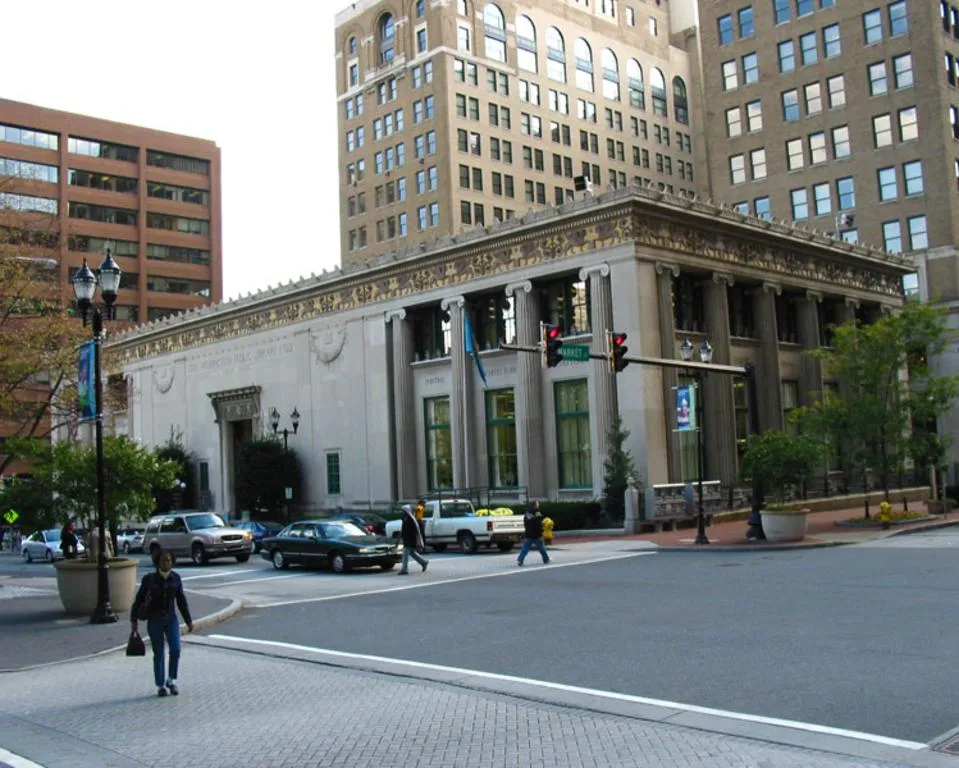 Photo: Wilmington Public Library, via assets.simpleviewinc.com
McKinley was mapping freedom.
Born to a family of modest means in rural Delaware, Sarah had never planned on becoming America's most unlikely revolutionary. She'd taken the librarian position in 1843 because it was respectable work for an unmarried woman, and because she genuinely loved books. But love of literature wasn't what made her legendary—it was her obsession with organization and her access to information that others couldn't see.
The Network in Plain Sight
Libraries in the 1840s were more than repositories for books. They were informal communication hubs where traveling businessmen, clergy, and politicians would stop to catch up on correspondence and local news. McKinley realized she was sitting at the center of an intelligence goldmine.
She began paying attention to patterns. Which ministers traveled which routes? Which merchants had business in both slave and free states? Who received mail from Quaker communities known for their abolitionist sympathies? Most importantly, she started correlating these movements with the whispered stories of missing slaves that filtered through her reading room.
The breakthrough came when a Philadelphia abolitionist, posing as a book collector, approached her about acquiring rare texts on "moral philosophy." The coded language was clear enough. Within weeks, McKinley had established herself as a crucial link in what would become one of the Underground Railroad's most sophisticated information networks.
The Librarian's Advantage
What made McKinley uniquely effective wasn't just her access to information—it was her invisibility. In an era when women, especially unmarried women in quiet professions, were largely overlooked by law enforcement, she could coordinate activities that would have gotten male abolitionists arrested immediately.
She developed a system that was brilliant in its simplicity. Book requests became coded messages about safe house availability. Overdue notices indicated when routes were compromised. Even her library's acquisition records served as a cover for tracking the movement of "packages"—the Underground Railroad's term for escaping slaves.
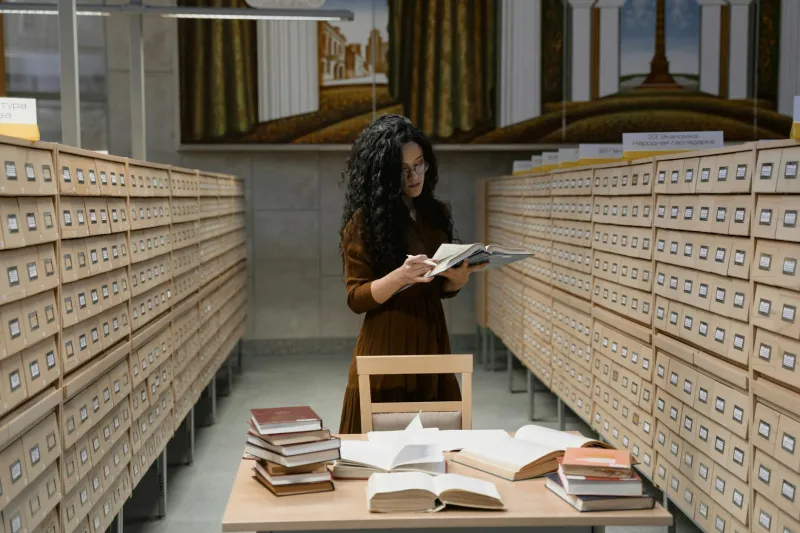
McKinley's personal library card catalog became a masterwork of coded intelligence. Under "Natural History," she tracked seasonal patterns that affected escape routes. "Geography" contained detailed notes about terrain, river crossings, and friendly communities. "Biography" held profiles of conductors, safe house operators, and sympathetic officials.
The Great Coordination
By 1850, McKinley was coordinating safe passage for an estimated 200 people per year through Delaware alone. Her network extended from Maryland's Eastern Shore all the way to Philadelphia, with connections reaching into Virginia and North Carolina. She never met most of the people she helped, never saw their faces or learned their names. But her careful record-keeping and strategic thinking kept them alive.
The Fugitive Slave Act of 1850 should have ended her work. Instead, it made her more valuable. As federal agents increased their surveillance of known abolitionists, McKinley's cover became even more perfect. Who would suspect a quiet librarian of orchestrating one of the era's most audacious acts of civil disobedience?
She adapted her methods, developing new codes and expanding her network of book-loving conspirators. Seminary students became messengers. Traveling lecturers carried information between cities. Even the library's subscription to newspapers from other states provided crucial intelligence about changing political conditions.
The Hidden Revolution
McKinley's story challenges everything we think we know about resistance and revolution. While more famous abolitionists gave speeches and wrote pamphlets, she was quietly moving human beings from bondage to freedom. While others debated the morality of slavery in public forums, she was solving the practical problems of how to get someone from Point A to Point B without getting killed.
Her methods were so effective precisely because they were so ordinary. In a profession built on discretion and systematic thinking, she found the perfect tools for coordinating a secret war. Her colleagues saw a dedicated librarian who stayed late and kept excellent records. Law enforcement saw a spinster who posed no threat to anyone.
The truth was far more dangerous.
Legacy in the Margins
Sarah McKinley died in 1883, having spent the post-war years quietly returning to ordinary library work. Her coded records were discovered decades later, tucked away in the library's archives like any other administrative documents. Historians estimate that her network facilitated the escape of over 2,000 people during its peak years of operation.
Her story reminds us that history's most effective revolutionaries aren't always the ones making speeches from podiums. Sometimes they're the ones sitting quietly in the background, organizing information and connecting dots that others can't see. Sometimes the most dangerous person in the room is the one everyone assumes is harmless.
In McKinley's case, being underestimated wasn't a disadvantage—it was her greatest weapon.