Blueprints From the Cold: The Teenager Who Slept in Libraries and Then Rebuilt a City
Photo: Godfried Schalcken, Public domain, via Wikimedia Commons
There's a photograph taken in 1987 of downtown Dayton, Ohio — a flat, forgettable stretch of concrete and glass that looks like someone ran out of ideas somewhere around 1962 and never came back. Compare it to a photograph taken twenty years later, and you're looking at what might as well be a different city. The difference, quietly and stubbornly, is one man's story.
Marcus Hale was fifteen when he stopped having a permanent address. His mother's illness, a landlord with no patience, and a social services system stretched too thin left him cycling between a cousin's couch, a church basement, and, most reliably, the Dayton Metro Library on West Third Street. He didn't go there for the books, at least not at first. He went because it was warm, because the staff didn't ask too many questions, and because a security guard named Earl had quietly decided that a quiet kid with nowhere to go was nobody's problem if he sat in the corner and didn't make trouble.
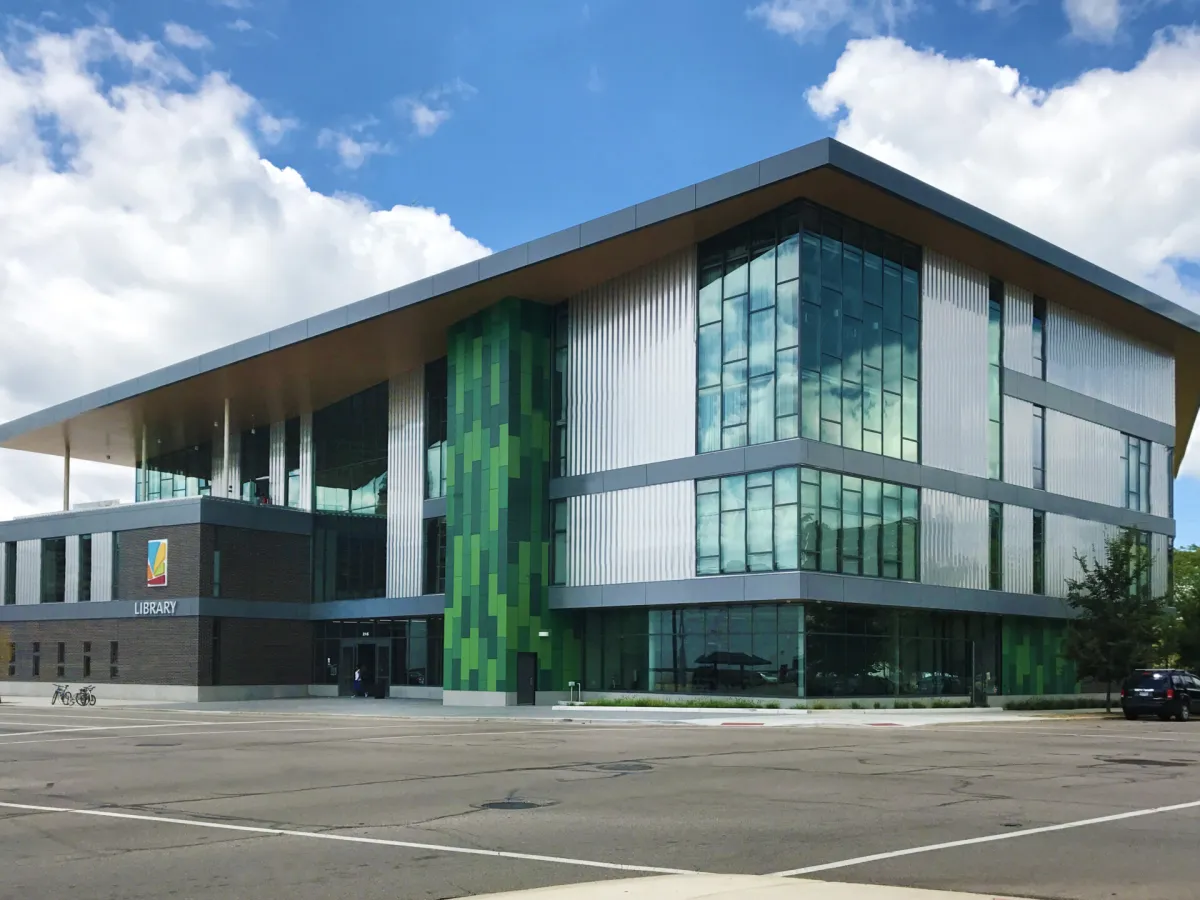 Photo: Dayton Metro Library, via heapy.com
What Marcus found in that corner changed everything.
The Accidental Curriculum
The library's reference section held a collection of architectural journals and municipal planning documents that most patrons walked past without a second glance. Marcus didn't walk past them. He stopped, pulled one down, and spent three hours staring at a set of structural drawings for a civic center in Minneapolis. He didn't understand what he was looking at — not yet. But something in the precision of the lines, the way a building's entire logic could be expressed in two dimensions, hooked him completely.
Over the next two years, he essentially built his own architecture curriculum from whatever the library held. He worked through back issues of Architectural Record. He found a donated copy of Francis Ching's Architecture: Form, Space, and Order and read it until the spine cracked. He checked out books on structural engineering, urban planning, and the history of American cities, reading them at the same table, night after night, until the library closed and he had to figure out where to sleep.
He never enrolled in a formal program. The application fees alone were prohibitive, and the prerequisite of a stable address made the paperwork feel like a cruel joke. But the absence of institutional structure, which might have crushed another person, did something unexpected to Marcus. It made him ferociously self-directed. Without a professor to tell him what mattered, he followed every thread that interested him, diving deep into topics that a standard curriculum might have glossed over in a single lecture.
"I didn't know what I was supposed to skip," he said in a 2009 interview with an Ohio design publication. "So I didn't skip anything."
Getting In the Door
By seventeen, Marcus had secured a part-time job with a small Dayton drafting firm through a connection at his church. He wasn't hired as a designer — he was hired to run errands and clean up. But he stayed late every night, watching the licensed architects work, asking questions that occasionally startled them with their specificity.
One of the firm's principals, a woman named Dorothy Ashworth, noticed. She started assigning him small drafting tasks off the books, then slightly larger ones. When she eventually asked where he'd studied, his answer stopped her cold.
Dorothy became an informal mentor — a role she later said she took on partly out of guilt about the profession's barriers and partly because Marcus's instincts were simply too interesting to ignore. She sponsored his application to a community college drafting program, wrote him a reference for an apprenticeship, and eventually helped him navigate the licensing process that, in Ohio, allows candidates with sufficient documented experience to sit for the architectural exam without a traditional degree.
He passed on his second attempt. He was twenty-six.
The Vision That Only Outsiders Can See
What made Marcus Hale's eventual work distinctive wasn't technical brilliance, though his technical grounding was solid. It was perspective. Having spent years observing the city from its margins — from bus shelters and park benches and library reading rooms — he understood how people actually moved through urban space in ways that designers working from comfortable offices often didn't.
His early projects in Dayton's underfunded neighborhoods were small: a community health clinic, a library branch renovation, a mixed-use building on a long-vacant lot near the Oregon District. But each one shared a quality that residents noticed even if they couldn't name it. The spaces felt like they'd been designed for the people who actually used them, not for a rendering in a developer's pitch deck.
 Photo: Oregon District, via heyexplorer.com
That reputation grew. By the early 2000s, Marcus was leading larger redevelopment projects in downtown Dayton, working alongside city planners to reimagine corridors that had been hollowing out for decades. His approach consistently prioritized walkability, mixed-income integration, and what he called "dignity design" — the idea that public space should signal to everyone who enters it that they belong there.
The results are visible today. Several blocks of downtown Dayton that once felt abandoned now anchor a modest but genuine urban revival. A mixed-use development he designed near the riverfront won a regional AIA award in 2011. A community center he led in West Dayton became a national model for neighborhood-scale architecture.
What the Cold Taught Him
It would be dishonest to romanticize what Marcus went through as a teenager. Homelessness is dangerous and damaging, and he has said plainly that the experience left marks he still carries. The point isn't that sleeping in libraries is a good education strategy. The point is what he did with the only resources he had.
Forced to learn entirely on his own terms, he developed a relationship with his craft that was personal in a way formal education rarely produces. Every drawing he studied was one he chose. Every concept he absorbed was one he sought out because it genuinely fascinated him, not because it would be on an exam. The depth of that self-directed engagement became the foundation of everything that followed.
There's something in that for anyone who's ever been told — by circumstance or institution or simple bad luck — that the door they wanted was closed to them. Marcus Hale didn't find a different door. He sat outside the one he wanted, for years, learning everything he could about what was on the other side. And when it finally opened, he walked in knowing more about the building than most of the people who'd been inside the whole time.