Too Hot to Handle, Too Necessary to Ignore: Seven Americans Whose Anger Rewrote the Rules
Photo: State Library of Queensland, Australia, No restrictions, via Wikimedia Commons
They were called volatile, difficult, unprofessional, and unmanageable. They were passed over, pushed out, and occasionally escorted from the building. And then, one by one, the rooms that rejected them had to reckon with what they had built on the way out the door.
America has a complicated relationship with intensity. We celebrate passion in retrospect and punish it in real time. The same quality that gets someone labeled a problem in a staff meeting gets labeled visionary in a biography. These seven people lived that gap — and what they did with it changed more than their own careers.
1. Ida B. Wells — The Reporter Who Refused to Lower Her Voice
In the 1890s, Ida B. Wells was the kind of journalist that newspaper owners claimed to want and then immediately tried to manage into silence. Her investigative reporting on lynching in the American South was precise, documented, and enraging — both to the perpetrators she named and to the white editors who found her tone inconvenient. She was described in polite circles as aggressive. Her Memphis newspaper office was destroyed by a mob. She was run out of the South with death threats.
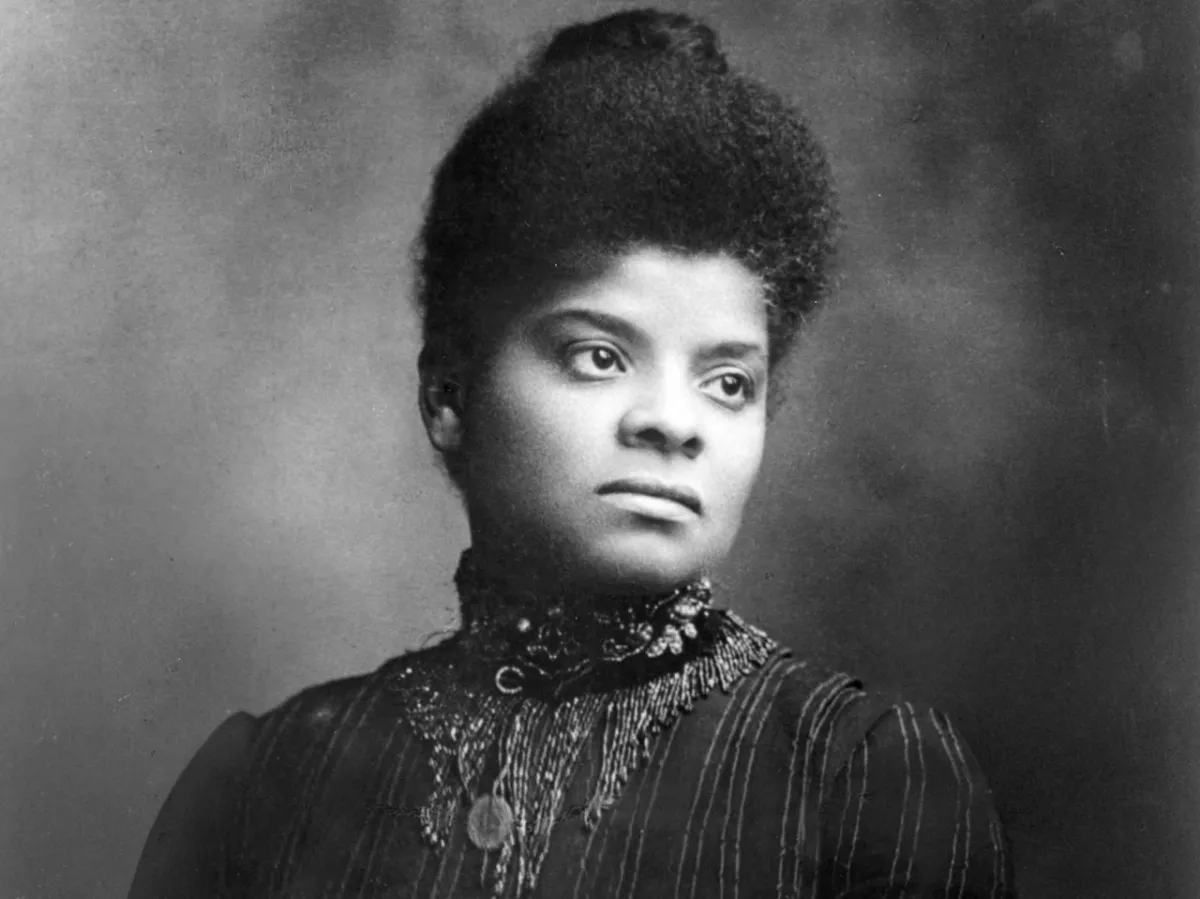 Photo: Ida B. Wells, via www.chicagotribune.com
She kept writing.
The specific moment her fury became architecture rather than noise was her 1892 pamphlet Southern Horrors, which laid out the statistical case for what lynching actually was — not a response to crime, but a mechanism of economic and political control — with the cold precision of someone who had decided that outrage without evidence was insufficient. That combination, the anger and the rigor together, produced a document that reformers, legislators, and eventually civil rights organizations used for decades. She did not calm down. She got more organized.
2. Ignaz Semmelweis — The Doctor Who Yelled When He Should Have Been Polite
In 1840s Vienna, Ignaz Semmelweis figured out that doctors were killing their patients by going from autopsies to deliveries without washing their hands. The mortality rates were right there in the data. The solution was soap. He was correct in every particular.
He was also, by the accounts of his contemporaries, impossible to be around when challenged on this point. He did not respond to skepticism with patience. He responded with fury. He wrote open letters calling his colleagues murderers. He was not wrong, but he was loud about not being wrong in a way that the medical establishment of his era found deeply threatening.
He was dismissed from his position. He spent years in professional exile. He died in a mental institution in 1865, arguably broken by the refusal of his peers to accept what he had proven.
But here is the part that matters: the documentation he produced during his years of angry, obsessive advocacy was so thorough that when Lister and Pasteur began developing germ theory a decade later, Semmelweis's work was already there, waiting. His rage had made him meticulous. The establishment that rejected him could not reject the numbers.
3. Florence Kelley — The Lobbyist They Kept Trying to Sit Down
Florence Kelley arrived in Chicago in 1891 with a law degree, a failed marriage, three children, and a specific and non-negotiable fury about child labor. She moved into Hull House, got herself appointed as a factory inspector, and began producing reports on working conditions in Illinois sweatshops that were so detailed and so damning that legislators had difficulty pretending they hadn't read them.
She was not a comfortable presence in political meetings. She interrupted. She corrected people. She had no patience for procedural delay when children were working sixteen-hour shifts in unventilated rooms.
The Illinois Factory Act of 1893, which established the first legal limits on child labor and working hours for women in the state, was passed in part because Kelley made it politically more exhausting to ignore her than to act. She went on to found the National Consumers League and spent the next four decades being too intense for every room she entered and producing legislation that protected millions of American workers. The anger was not incidental. It was the engine.
4. Bill Russell — The Champion Who Wouldn't Perform Gratitude
Bill Russell won eleven NBA championships in thirteen seasons. He was also, by the standards of 1950s and 1960s Boston, dangerously unwilling to be the kind of Black athlete that white sports culture felt comfortable celebrating. He refused to sign autographs for fans he felt had been disrespectful. He spoke plainly about racism in Boston — a city that preferred its sports heroes grateful and quiet. He was called arrogant, difficult, and ungrateful by sportswriters who were not accustomed to athletes who read their own contracts and had opinions about their own dignity.
 Photo: Bill Russell, via static0.givemesportimages.com
The specific moment his refusal to perform deference became something larger was his decision to boycott a 1961 exhibition game in Lexington, Kentucky, after he and his Black teammates were refused service at their hotel. He walked. No negotiation, no public statement calibrated for white comfort — he simply left.
That act, and the consistency behind it, helped establish a template for athlete activism that the next generation, from Muhammad Ali to Kareem Abdul-Jabbar, would build on directly. Russell's so-called arrogance was the thing that made him impossible to dismiss. You can dismiss a grateful man. You cannot dismiss a man who has decided he doesn't need your approval.
5. Alice Hamilton — The Scientist Who Made Industry Uncomfortable on Purpose
Alice Hamilton spent the early 1900s doing something the American industrial establishment found genuinely alarming: she went into factories, talked to workers, collected data on occupational illness, and published what she found. She was the first person to systematically document lead poisoning in American industry, and she did it with a directness that company lawyers described as confrontational and that she described as accurate.
She was the first woman appointed to the faculty of Harvard Medical School, where she was told she could not march in commencement processions or use the Faculty Club. She found this irritating and said so. She kept working.
What made Hamilton's anger productive rather than merely loud was that she paired it with documentation so thorough that denial became untenable. She did not simply assert that workers were being poisoned. She named the compounds, traced the exposure routes, and identified the specific industrial processes responsible. The companies that wanted her silenced found that the data she had already published made silence impossible. Her intensity was, in practice, a research methodology.
6. Woody Guthrie — The Folk Singer They Couldn't Tame
Woody Guthrie was dropped by radio sponsors, blacklisted from commercial broadcasting, and described by network executives as a liability. His music was not the problem. His refusal to keep politics out of it was. He wrote songs about Dust Bowl refugees, corrupt landlords, and the gap between American mythology and American reality with a specificity that made comfortable people uncomfortable, which was entirely the point.
He was not easy to be around. He was restless, unreliable by conventional professional standards, and constitutionally incapable of softening a lyric to make it more palatable to an advertiser.
The moment his so-called liability became a legacy was the writing of This Land Is Your Land in 1940 — a direct, furious response to the complacency of God Bless America, which he felt papered over the reality of what millions of Americans were living through. The song he wrote in that anger became one of the most widely sung pieces of American music ever produced. He did not write it to be palatable. He wrote it because he was angry, and because the anger had somewhere specific to go.
7. Shirley Chisholm — The Politician Who Ignored the Part Where She Was Supposed to Wait
Shirley Chisholm was told, at various points in her political career, that she was too aggressive, too impatient, and insufficiently deferential to the structures she was attempting to work within. When she ran for President in 1972 — the first Black American and first woman to seek a major party's presidential nomination — the Democratic establishment's response ranged from condescension to active obstruction. She was excluded from televised debates. Her campaign was underfunded. She was described as making a point rather than making a run.
She ran anyway.
The specific pivot where her refusal to wait became something institutional was her decision to campaign in the South, including in states where her candidacy was considered a provocation. She won delegates. She demonstrated, in concrete arithmetic, that a coalition the party had been ignoring could show up at a convention and demand to be counted.
The politicians who dismissed her in 1972 spent the next three decades watching the electorate shift toward exactly the coalition she had identified. Her anger at being told to wait was, in retrospect, a remarkably accurate read of where American politics was heading. She just refused to let it get there without her.
The Pattern Nobody Wants to Name
Seven people. Seven different eras, industries, and arenas. One consistent pattern: the trait that got them pushed out of the room was the same trait that made the room change.
America's institutions have always been better at managing calm than at harnessing intensity. The people on this list were not managed. They were expelled. And in the space outside the institution, where there was nothing left to lose and no performance of acceptability required, they built the things that the institutions eventually had to adopt, acknowledge, or simply live with.
The anger was never the problem. It was always the point.