No Permission Required: The Writers America Refused to Publish — Who Published America Anyway
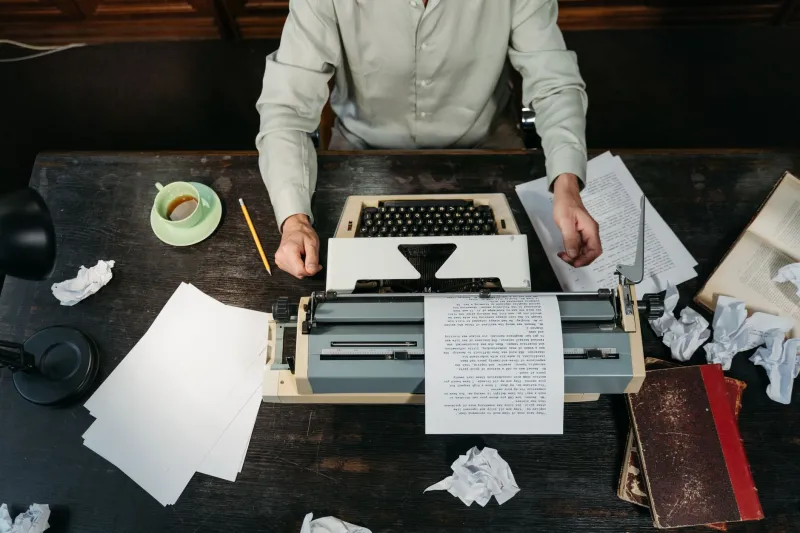
The rejection letter is one of American literature's great unsung documents. Thousands of them exist — some polite, some brutal, some almost comically wrong in hindsight — tucked into archives and estate boxes across the country. They represent the moments when the gatekeepers looked at something genuinely new and said, confidently, not this.
What happened next is the interesting part.
Some writers folded. Some rewrote themselves into something more acceptable. But a handful did something else entirely — they went sideways. They found printers, started their own presses, passed pages hand to hand, read aloud in bars, mailed manuscripts to strangers, and generally refused to accept that the system's verdict was final.
In the process, they didn't just find their audiences. They built entirely new roads to reach them — roads that American writers are still traveling today.
The Poem That Had to Publish Itself
When Walt Whitman couldn't find a publisher for Leaves of Grass in 1855, he didn't wait. He set some of the type himself at a Brooklyn print shop, paid for the run out of his own pocket, and sent copies to writers he admired — including Ralph Waldo Emerson, who wrote back immediately with what remains one of the most enthusiastic blurbs in literary history.
The book sold almost nothing. Critics were baffled or offended by its sprawling, sensual, formally anarchic lines. But the letter from Emerson circulated. The conversations started. And Whitman kept publishing — revised edition after revised edition, each one bigger and stranger than the last, throughout his entire life.
What Whitman understood, almost by accident, was that a book didn't need to sell to matter. It needed to find the right readers first. The commercial success, if it came at all, would follow the cultural conversation. He was working on a timeline that the publishing industry of 1855 wasn't built to accommodate — and so he built his own.
Too Honest for the Mainstream
Zora Neale Hurston published Their Eyes Were Watching God in 1937 to reviews that ranged from lukewarm to hostile. Some of the harshest criticism came from within the Harlem Renaissance itself — writers who felt her rich, vernacular-driven prose was too focused on personal experience and not political enough for the moment.
The novel went out of print. For decades, it was essentially invisible.
Hurston died in 1960, broke and largely forgotten, buried in an unmarked grave in Fort Pierce, Florida.
Then, in 1975, Alice Walker wrote an essay in Ms. magazine about going to find that grave. Walker called Hurston the greatest Black female writer America had produced and demanded that readers go looking for her work. They did. Their Eyes Were Watching God was republished in 1978 and has never gone out of print since.
Hurston's story is a painful one — she didn't live to see her vindication. But it's also a story about how literary gatekeeping works across time. The establishment that dismissed her in 1937 couldn't control what readers would think in 1975. She had written something true enough to survive the silence.
Mimeograph and Madness: The Beats Find Their Own Press
By the early 1950s, Allen Ginsberg, Jack Kerouac, and William S. Burroughs had collectively accumulated enough rejection letters to wallpaper a decent-sized apartment. On the Road sat in a drawer for six years. Naked Lunch was considered legally unpublishable in the United States. Howl was the kind of poem that made editors reach for their rejection stamps before they'd finished the first page.
The solution came from a small bookstore in San Francisco.
City Lights Books, founded by Lawrence Ferlinghetti in 1953, wasn't just a store — it was a publisher willing to print what New York wouldn't touch. When Ferlinghetti published Howl and Other Poems in 1956, the San Francisco Police Department promptly arrested him for obscenity. The trial that followed made national news. By the time Ferlinghetti was acquitted, Howl had become the most talked-about poem in America.
Kerouac and Burroughs found their own paths — Viking eventually published On the Road in 1957 after Kerouac's name had been made by association with the Beat scene; Naked Lunch was published in Paris by Olympia Press before an American edition became legally possible. None of it happened through conventional channels. All of it happened because a loose network of small presses, independent bookstores, and mimeographed literary magazines had built an infrastructure that the mainstream didn't control.
The Beats didn't just write outside the establishment. They built the plumbing that carried their work to readers — and that plumbing became the foundation of American independent publishing.
The Novel That Became a Phenomenon Before It Was a Book
John Kennedy Toole wrote A Confederacy of Dunces in the early 1960s and spent years trying to get it published. The rejections accumulated. One editor at Simon & Schuster strung him along for years before ultimately passing. Toole, struggling with depression, died by suicide in 1969 at thirty-one. The manuscript sat in a box.
His mother, Thelma Toole, spent the next decade trying to get the novel published in her son's memory. She was rejected so many times and so decisively that the story of her persistence became almost as remarkable as the book itself. Finally, in 1980, Louisiana State University Press — a small academic press not known for fiction — agreed to publish it.
A Confederacy of Dunces won the Pulitzer Prize for Fiction in 1981.
The book's journey is a quiet argument against the idea that the market knows what it wants. It doesn't, always. Sometimes it needs to be shown.
Self-Publishing Before It Was Respectable
Long before Amazon made self-publishing a viable commercial strategy, writers were printing and selling their own work out of trunks, at readings, through mail-order ads in the back of literary magazines.
Edgar Allan Poe self-published his first collection of poems in 1827 at eighteen, printing a tiny run at his own expense. Upton Sinclair, frustrated by the commercial compromises demanded by mainstream publishers, self-published The Jungle in 1905 after serializing it in a socialist newspaper — and sold enough copies through direct mail to attract Doubleday, which published the trade edition later that year.
The pattern repeats across American literary history: writer gets rejected, writer goes direct, writer builds enough of an audience that the establishment eventually has to take notice. The rejection doesn't stop the work. It just changes the route.
What the Gatekeepers Got Wrong — And Why It Mattered
There's a tempting narrative here about visionary artists triumphing over small-minded institutions, and there's some truth in it. But the more interesting story is structural.
The publishing industry, like any industry, is built to identify and replicate what has already worked. It is constitutionally bad at recognizing things that have never existed before. Whitman's Leaves of Grass didn't look like anything that had sold well in 1855. Their Eyes Were Watching God didn't fit the political priorities of the Harlem Renaissance's most powerful voices. Howl was, genuinely, obscene by the legal standards of its time.
The writers on this list weren't rejected because their work was bad. They were rejected because their work was new — and newness is, by definition, unrecognizable to systems designed to recognize the familiar.
What each of them figured out, in their own way, was that the audience for something new doesn't exist yet. You have to find it, or build it, or wait for it to grow into the work. The gatekeepers couldn't do that for them. So they did it themselves.
And American literature is stranger, richer, and more honest because they did.