What the Machines Left Behind: The Immigrant Inventors Who Took Over an Empty Factory
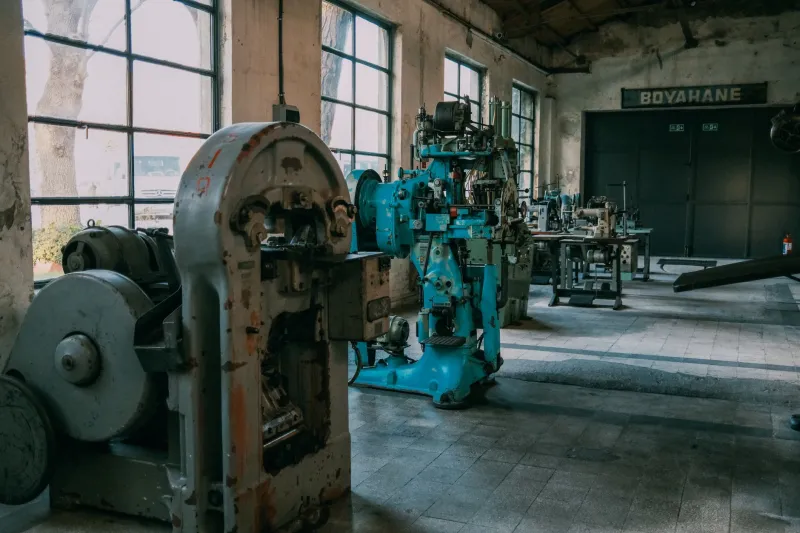
The last shift at the Harmon Fabrication plant in Elkhart County, Indiana ended on a Tuesday in March. No ceremony, no send-off. Just a foreman locking a chain-link gate and a parking lot that stayed empty for the next fourteen months.
For the town, it felt like a period at the end of a very long sentence. Three hundred and twelve jobs gone. Most of them to a facility in Monterrey, Mexico. The local paper ran the story on the front page for three days, then moved on. City council held a meeting. Nobody had much to say that hadn't already been said in a hundred other towns in a hundred other counties across the Rust Belt.
But not everyone left.
The People Nobody Counted On
About sixty of Harmon's former employees had nowhere obvious to go. Many were undocumented workers — men and women who had built lives in Indiana over the previous decade, raised kids in local schools, attended the same churches as their documented neighbors, and now found themselves holding skills the local economy no longer officially wanted.
Returning to their countries of origin wasn't a straightforward option. Neither was finding comparable work in a region that had just shed its largest employer. So they stayed. And they started talking.
Informally, at first. Kitchen tables. Church basements. The parking lot of a Kroger on Route 6. But a few of them — particularly a group of former machinists and one woman who had worked in quality control for nearly a decade — kept circling back to the same conversation: the building itself was still there. The equipment had been stripped. But the floor space, the electrical infrastructure, the loading docks — all of it was sitting idle while the property sat in a legal dispute between the plant's former owner and a creditor.
Nobody was using it. Nobody was watching it particularly closely, either.
Borrowed Space, Borrowed Time
What began as a practical arrangement — a few former Harmon workers using a section of the facility to repair small engines and farm equipment for neighbors — gradually became something harder to categorize.
Within eighteen months, the informal collective occupying the building had grown to include nearly forty people. They were fabricating custom irrigation components for small farms that couldn't afford commercial suppliers. They were building modified wheelchair frames for community members who couldn't access standard medical equipment. One former line supervisor, who had spent years working with hydraulic systems, was quietly developing a low-cost water filtration unit designed specifically for rural wells with contamination problems — a project that would eventually attract attention from engineers at two major universities.
None of this was legal in any tidy sense. The building's status was murky. The workers' documentation status was complicated. The products they were making existed in a gray zone that defied easy classification. And yet the work was undeniably real, undeniably skilled, and — as it turned out — undeniably needed.
The Pressure That Produces Diamonds
There's a pattern that shows up again and again in the history of innovation: the people with the fewest official resources often develop the most creative solutions. Not because hardship is romantic — it isn't — but because necessity strips away the luxury of waiting for perfect conditions.
The Elkhart group didn't have access to venture funding, university research partnerships, or the kind of legal infrastructure that normally surrounds product development. What they had was deep technical knowledge, a shared sense of urgency, and a willingness to iterate quickly because they couldn't afford to waste materials on approaches that didn't work.
The filtration unit is probably the clearest example. The man who designed it — a former hydraulic systems tech who had immigrated from Oaxaca in 2009 — had no formal engineering degree. What he had was fifteen years of hands-on experience with fluid dynamics and pressure systems, combined with a very specific problem he was trying to solve for a specific community. The result was a unit that cost a fraction of comparable commercial products and outperformed several of them in independent testing.
He didn't set out to disrupt an industry. He set out to fix a well.
When the Outside World Noticed
The collective's existence wasn't exactly secret, but it wasn't advertised either. Word spread slowly, through the kind of networks that don't show up on LinkedIn — community organizers, rural health workers, a county extension agent who started directing farmers their way when commercial suppliers couldn't help.
The first outside attention came from an unexpected direction: a legal clinic at a regional law school that was running a project on undocumented labor and intellectual property. The students who visited the facility came expecting to document a story about vulnerability. What they found was considerably more complicated — and considerably more impressive.
Their report circulated in ways they hadn't fully anticipated. It landed on the desk of a program officer at a Midwest-focused economic development nonprofit. That person made a call. That call led to a site visit. That site visit led to a conversation about how to formalize what was already happening without dismantling what made it work.
By 2019, a version of the collective had been reconstituted as a legitimate small-business incubator — one with legal status, formal leases, and a partnership with a regional community college that offered pathways for participants to document their skills through recognized credentials. Several of the original participants had secured legal status through processes that the nonprofit helped facilitate. The filtration unit had attracted a licensing inquiry from a water infrastructure company.
The building that everyone had written off as a symbol of decline had become something else entirely.
What Elkhart County Actually Lost — And Found
The story of Harmon Fabrication's former workforce doesn't fit neatly into any of the standard narratives about immigration, deindustrialization, or innovation. It's not a simple triumph. The path involved years of legal precarity, genuine risk, and a level of anxiety that no inspirational gloss should paper over.
But it does illustrate something that the conventional economic playbook tends to miss: the most valuable asset a manufacturing town loses when a plant closes isn't the machinery or the building. It's the accumulated human knowledge of the people who ran that machinery for years. That knowledge doesn't disappear when the chain-link gate goes up. It just needs somewhere to go.
In Elkhart County, it found a place. An unlikely one. A legally ambiguous one. But a real one.
And the things it produced — the repaired equipment, the modified wheelchairs, the filtration units, the irrigation components — were real too. Useful, tested, and built by people that the formal economy had decided it no longer needed.
Turns out the economy was wrong.