Rock Bottom, Rising Dough: Five American Chefs Who Cooked Their Way Back From Complete Collapse
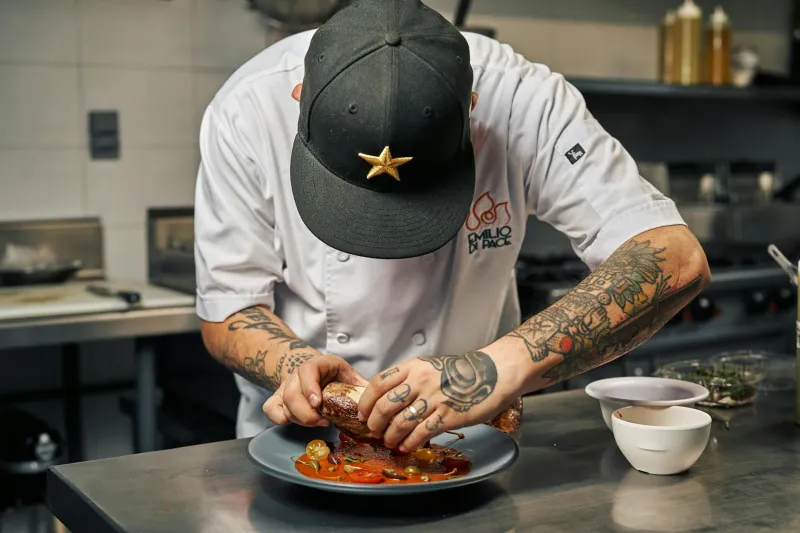
When Life Gives You Nothing, Make Something Extraordinary
The culinary world loves a good origin story, but rarely are they as raw as these. While many celebrity chefs trace their success to early passion or family traditions, these five Americans took a different route: straight through personal hell and back again, with nothing but a knife and a dream.
Their stories prove that sometimes the best ingredients for success are failure, desperation, and the kind of hunger that has nothing to do with food.
Marcus Williams: From Prison Cell to Michelin Guide
Marcus Williams was 42 when he walked out of San Quentin State Prison in 2008, carrying a cardboard box and fifteen years of regret. His crime? Armed robbery fueled by a cocaine addiction that had cost him his marriage, his construction business, and nearly his life.
 Photo: San Quentin State Prison, via ascent.inc
But prison had given Williams something unexpected: time to think and access to a kitchen program that changed everything. "I started cooking to stay busy," Williams recalls. "But somewhere between learning to make bread and teaching other inmates basic knife skills, I found something I'd never had before—peace."
Released with nowhere to go, Williams slept in his car for three months while working prep shifts at a Oakland diner for minimum wage. His parole officer thought he was crazy when he announced plans to open his own restaurant. Five years later, Williams's "Second Chances" became the first restaurant owned by a formerly incarcerated person to receive a Michelin star.
Today, Williams employs twelve formerly incarcerated individuals and runs a culinary training program inside three California prisons. His signature dish? A deconstructed meatloaf that transforms the most basic prison commissary ingredients into something sublime.
Sarah Chen: Bankruptcy at 45, James Beard Winner at 52
Sarah Chen's first career was everything the American Dream promised: MBA from Wharton, corner office at a Fortune 500 company, suburban house with a two-car garage. Then the 2008 financial crisis hit, taking her job, her marriage, and eventually her home.
By 2010, Chen was 45 and living in her sister's basement in Portland, Oregon. "I had never cooked anything more complicated than scrambled eggs," she admits. "But I had time, I had my grandmother's recipes in my head, and I had nothing left to lose."
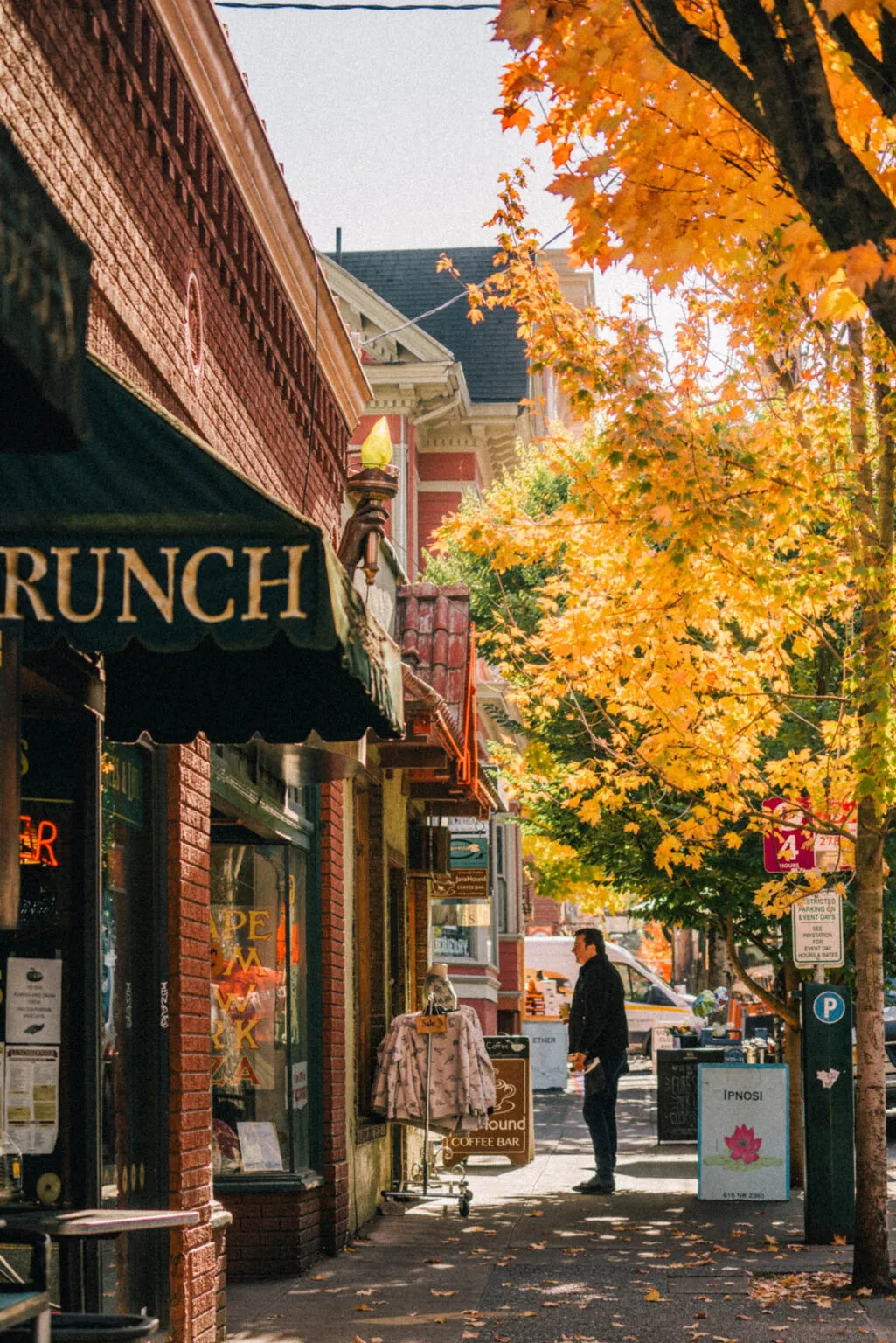 Photo: Portland, Oregon, via oregonessential.com
Chen started with a farmers market stand, selling Korean-fusion tacos that blended her grandmother's traditional recipes with techniques she learned from YouTube videos. Her kimchi tacos became legendary among Portland food lovers, but Chen was still sleeping on an air mattress and driving a 1998 Honda with 200,000 miles.
The breakthrough came when a food critic happened to try her bulgogi quesadilla on a rainy Tuesday morning. The review in the Portland Mercury changed everything. Within two years, Chen had her own restaurant. Within five, she was nominated for a James Beard Award. At 52, she won.
"My bankruptcy taught me that the only security comes from betting on yourself," Chen says. "Everything else can disappear overnight."
Tommy Rodriguez: From Homeless to Hot Chef
Tommy Rodriguez's addiction to methamphetamine cost him everything by age 38: his job as an electrician, his apartment, his relationship with his teenage daughter. For two years, he lived on the streets of Phoenix, Arizona, getting by on odd jobs and whatever he could find.
 Photo: Phoenix, Arizona, via wallpapers.com
The turning point came at a homeless shelter that required residents to help with meal preparation. Rodriguez discovered he had an intuitive understanding of flavors and a natural ability to stretch cheap ingredients into satisfying meals. "I could make canned beans taste like something you'd pay for," he remembers.
After getting clean through a court-mandated program, Rodriguez convinced a local restaurant owner to let him work for free, just for the chance to learn. He slept in the restaurant's storage room for six months, studying cookbooks by flashlight and practicing knife skills on donated vegetables.
Rodriguez's big break came when he created a special menu for Thanksgiving 2015, designed to feed homeless individuals for free while also attracting paying customers. The "Gratitude Menu" became an annual tradition that drew national attention.
Today, Rodriguez owns three restaurants across Arizona and runs a culinary program for individuals in addiction recovery. His philosophy is simple: "The kitchen saved my life. Now I use it to save others."
Diana Foster: Widow, Mother, and Unlikely Barbecue Queen
Diana Foster was 43 when her husband died suddenly, leaving her with three teenagers, a mountain of medical debt, and no clear path forward. She had never worked outside the home and had no college degree or professional skills.
What she did have was her late husband's backyard smoker and his handwritten barbecue recipes. "He always joked that his brisket could pay the bills," Foster says. "I never thought I'd have to find out if he was right."
Starting with weekend catering for church events and local parties, Foster slowly built a reputation around Kansas City. Her secret weapon wasn't just the recipes—it was her ability to connect with customers who were also struggling with loss and uncertainty.
"People could taste the love," Foster explains. "But they could also taste the desperation. I was cooking for my kids' future."
Foster's catering business grew into a food truck, then a permanent location. By 2019, she was competing on national barbecue circuits and winning. Her restaurant, "Danny's Legacy" (named for her late husband), now employs fifteen people and has been featured on the Food Network three times.
Jake Morrison: From Addict to Acclaimed
Jake Morrison's heroin addiction destroyed his career as a software engineer by age 35. After three failed rehab attempts and a near-fatal overdose, he found himself in a long-term treatment facility in rural Montana, convinced his life was effectively over.
The facility's work program assigned Morrison to kitchen duty, which he initially resented. "I thought it was punishment," he admits. "I had no idea it was salvation."
Morrison discovered that cooking required the same attention to detail and problem-solving skills that had made him successful in tech. More importantly, it gave him a sense of purpose and immediate gratification that helped fill the void left by drugs.
After completing treatment, Morrison enrolled in culinary school at age 37, financing his education with loans and part-time restaurant work. His final project—a seven-course tasting menu inspired by his recovery journey—caught the attention of a prominent Seattle restaurateur.
Today, Morrison is the head chef at one of Seattle's most acclaimed restaurants. His tasting menu, "Stages," takes diners through the emotional journey of addiction and recovery through food. It's booked solid six months in advance.
The Common Ingredients
What connects these five stories isn't just their dramatic falls and rises—it's their understanding that great cooking comes from authenticity, necessity, and the willingness to transform pain into nourishment.
Each of these chefs discovered that the kitchen offered something their previous lives had lacked: a place where failure could be immediately corrected, where creativity was rewarded, and where the simple act of feeding people provided meaning that transcended personal success.
Their restaurants don't just serve food—they serve hope. And their greatest accomplishment isn't the awards or recognition, but the proof that it's never too late to start over, one plate at a time.