Curiosity Didn't Need a Lab Coat: The New Mexico Housewife Whose Kitchen-Table Discovery Is Still Saving Lives
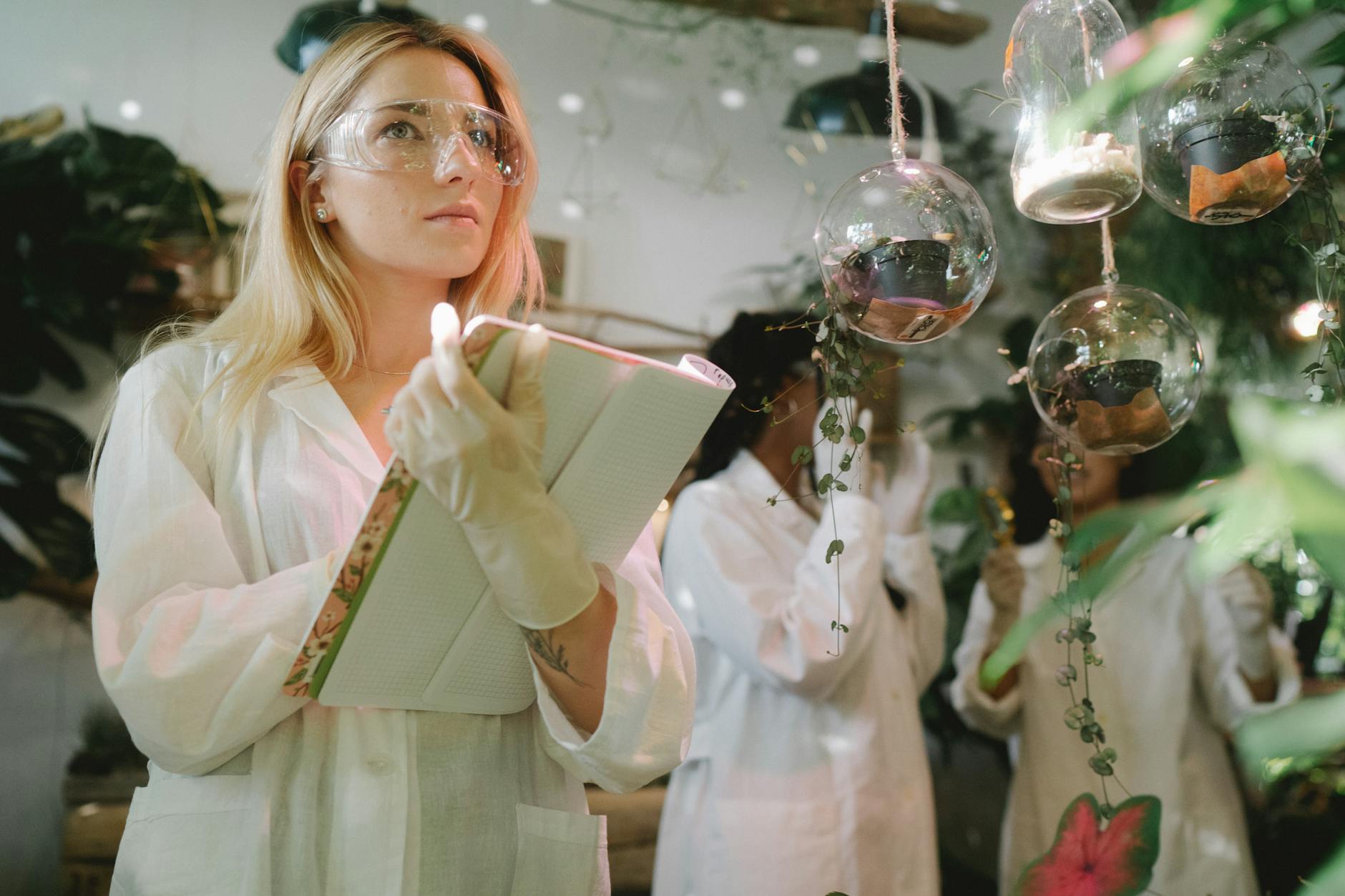
Curiosity Didn't Need a Lab Coat: The New Mexico Housewife Whose Kitchen-Table Discovery Is Still Saving Lives
The laboratory, as an institution, has a mythology problem.
We picture discovery happening in a specific kind of room: fluorescent-lit, sterile, populated by people in white coats who have earned the right to ask important questions through years of credentialed study. It's a tidy picture. It's also, historically, a picture that excluded most of humanity — including, almost entirely, women.
Margaret Eloise Vásquez did not have a laboratory. She had a kitchen in Taos, New Mexico, a library card she used with what her neighbors considered suspicious frequency, and a mind that simply could not stop pulling at loose threads.
What she found, in the mid-1950s, while her husband was at work and her children were at school, would take decades to be properly understood — and even longer to be properly credited.
A Life on the Margins of Expectation
Margaret was born in 1921 in Las Cruces, New Mexico, the daughter of a schoolteacher and a dry goods merchant. She was, by every account from people who knew her, the kind of person who read everything and remembered most of it. She graduated at the top of her high school class in 1939 and was accepted to the University of New Mexico.
She didn't go. The family couldn't afford it, and in any case, the expectation in her community — in most American communities in 1939 — was that a bright young woman would find a good husband. Margaret found one. Roberto Vásquez was kind, hardworking, and entirely untroubled by the fact that his wife read medical journals the way other people read magazines.
Through the 1940s, she raised three children, kept a large garden, and maintained a correspondence with a former high school science teacher who fed her a steady supply of academic papers he thought she'd find interesting. She almost certainly would have remained invisible to history if it hadn't been for a particular summer, a particular plant, and a particular stubbornness.
The Thread She Couldn't Let Go
In the summer of 1954, Margaret noticed something that had probably been happening for decades in the high desert landscape around Taos but that nobody, as far as she could determine, had formally documented.
She had been watching a local healer — a woman in her eighties whose family had used native plant remedies for generations — treat what appeared to be persistent skin infections with a poultice made from a combination of plants that Margaret couldn't immediately identify. The infections cleared. Quickly. In cases where standard treatments had been slow or ineffective.
Margaret was not a scientist. She knew that. But she was also a person who had spent fifteen years reading enough biochemistry to know that "interesting" and "coincidence" were not always the same thing.
She began, quietly and methodically, to document what she was seeing. She cross-referenced the plants against her library resources. She wrote letters — careful, deferential letters — to three researchers at the University of New Mexico's medical school, describing her observations and asking whether anyone had studied the antimicrobial properties of the specific plant compounds she'd identified.
Two letters went unanswered. One received a polite response suggesting she might be confusing correlation with causation.
She kept going anyway.
What She Actually Found
Over the following two years, Margaret conducted what would today be recognized as a remarkably rigorous observational study, given her resources. She documented dozens of cases, tracked outcomes, collected plant samples, and — using a basic microscope purchased secondhand from a school in Albuquerque — began attempting to isolate what she suspected was an active compound.
She couldn't complete that work alone. The equipment she needed didn't exist in her kitchen, and the people who had that equipment weren't returning her letters.
But in 1957, a young biochemist named Dr. Carl Hennessey arrived at UNM as a new faculty hire. He was, by his own later description, the kind of person who read every piece of mail that crossed his desk, including the letter from a woman in Taos that his predecessor had left in a pile marked "general public inquiries."
He drove to Taos on a Saturday.
What Margaret showed him — her notebooks, her samples, her careful and precise documentation — stopped him, he later wrote, "in the way that you stop when you realize someone has already solved the problem you were about to start working on."
The compound she had isolated, or come closest to isolating, turned out to be a previously undocumented variant of a naturally occurring antimicrobial agent with particular efficacy against a class of bacterial infections that was, in the 1950s, becoming increasingly resistant to standard treatments.
The Credit Gap
The research that followed was published in 1961. Carl Hennessey was the lead author. Margaret Vásquez was listed in the acknowledgments as having "contributed observational data."
This was not unusual. It was, in fact, entirely standard for the era — and for many eras before and after it. Women who contributed foundational work to scientific discoveries were routinely absorbed into the footnotes while male colleagues took the bylines. Rosalind Franklin and the structure of DNA is the famous example. Margaret Vásquez is one of hundreds of less famous ones.
Hennessey, to his credit, spent the rest of his career pushing back against that initial framing. In a 1978 retrospective paper, he wrote explicitly that the discovery originated with Margaret's observations and that his role had been to provide the laboratory infrastructure her work required. He called the original attribution "a failure of both honesty and imagination."
By then, the compound — refined and synthesized — was in use in clinical settings across the southwestern United States, particularly in the treatment of certain wound infections in pediatric patients. It is still in use today, in modified form, in a small number of specialized treatment protocols.
The Room That Wasn't Built for Her
Margaret Vásquez died in 1989. She had, in her later years, become something of a local figure in Taos — sought out by younger women interested in botany and natural medicine, occasionally visited by researchers who'd found Hennessey's 1978 paper and followed the thread back to its source.
She never expressed bitterness about the attribution, at least not publicly. In a 1983 interview with a regional newspaper, she said something that has stayed with everyone who read it: "The plant didn't care who found it. The children who got better didn't care either. I suppose I found that sufficient."
It is a generous answer. It is also, if you sit with it long enough, a devastating one.
Because the question her story raises isn't really about Margaret. It's about the system. Every barrier that kept women like her on the outside of formal science — the closed doors, the unanswered letters, the acknowledgment lines instead of bylines — didn't just limit individual careers. It shaped what questions got asked, what observations got followed up on, what threads got pulled.
Margaret found her thread in a kitchen in Taos because curiosity, unlike opportunity, was something no institution could fully control.
How many threads did we leave on the floor?