Wired Different: The Dyslexic Kid Who Flunked Twice and Then Built the Backbone of the American Internet
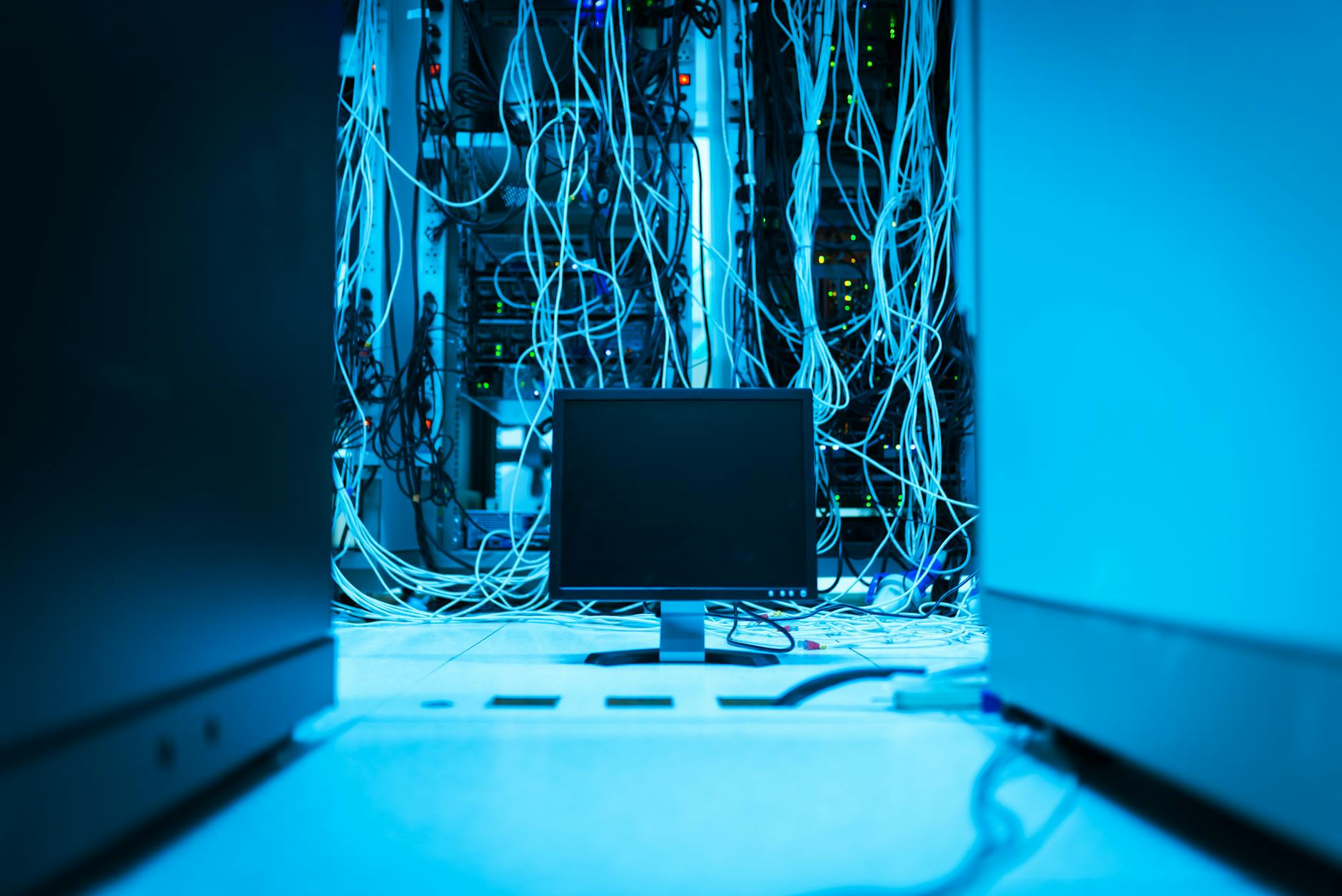
Wired Different: The Dyslexic Kid Who Flunked Twice and Then Built the Backbone of the American Internet
There's a version of the American tech origin story you've heard a hundred times. A dorm room. An Ivy League dropout. A garage in California. A hoodie.
This isn't that story.
This one starts in rural Ohio, in a town where the main employer was a paper mill and the school counselor told a fifteen-year-old boy that a trade might be his best bet. The boy's name was Raymond Elias Corbin — and if that name doesn't ring a bell, that's exactly the point.
The Kid Nobody Bet On
Ray Corbin was born in 1961 in Chillicothe, Ohio, the second of four kids raised by a single mother who worked double shifts at a diner. By third grade, his teachers had flagged him as a "slow reader." By sixth grade, the word "dyslexia" had entered the conversation, though in 1970s rural Ohio, the diagnosis came with very little support and a great deal of quiet shame.
School, for Ray, was a daily exercise in humiliation. Letters inverted themselves on the page. Instructions blurred. Timed tests felt like traps designed specifically for his brain. He failed eighth grade. Then, years later, he failed out of his first semester at Ohio State.
He didn't try again for three years.
When he did — enrolling in a small community college in Columbus — he lasted two semesters before the combination of financial pressure and academic frustration pushed him out again. Two schools. Two exits. By most measures, the system had given him its verdict.
But here's the thing about a brain that can't process information the conventional way: it finds other ways.
Learning to Think Sideways
While his peers were mastering linear problem-solving through lecture halls and textbooks, Ray was doing something different. He was tinkering. In his mother's garage, on a workbench cluttered with secondhand electronics he'd bought at swap meets, he was teaching himself how systems talked to each other — not by reading manuals, but by taking things apart and asking why in a way that credentialed engineers rarely had reason to.
The dyslexia that had made school a nightmare had, without anyone planning it, built a different kind of intelligence. Ray didn't absorb information in straight lines. He mapped it spatially. He saw networks — literal and conceptual — as living things, with pressure points and bottlenecks and workarounds. It was, as one of his later colleagues would put it, "like he could see the plumbing behind the walls."
By the mid-1980s, Ray had talked his way into a low-level technical support role at a regional telecommunications company in Columbus. He had no degree. He had a lot of nerve and an almost unsettling ability to diagnose network failures faster than anyone with twice his credentials.
The Problem Nobody Else Saw
In the early 1990s, as the commercial internet began its lurching, dial-up crawl into American homes, Ray was watching something that bothered him. The architecture being used to route data across regional networks was, in his view, fundamentally backwards. Engineers were building systems that assumed smooth, predictable traffic — and the internet, as he saw it, was never going to be smooth or predictable.
He wrote up his observations in a document that was, by his own later admission, barely readable. Disorganized. Full of diagrams where paragraphs should have been. He sent it to three network engineers he'd met at a regional tech conference.
Two of them never responded. One called him back.
That call led to a small, underfunded project operating out of a Columbus office park. No venture capital. No Stanford pedigree. Just Ray and a team of four people who trusted his instincts enough to follow them somewhere new.
What they built — a packet-routing optimization protocol that could dynamically redistribute network load in real time — became the quiet infrastructure underneath systems that millions of Americans use every single day. You've never heard of it. You've used it this week.
What the Ivy League Couldn't See
When Ray's work eventually attracted attention from larger players — and it did, in the late 1990s, when network demand exploded and the weaknesses he'd predicted became impossible to ignore — the reaction from established engineers was telling. Several admitted they'd looked at the same problem and reached the same dead end. They'd been trained to solve it a particular way, and that training had become a ceiling.
Ray had never been trained. He'd been excluded. And exclusion, it turned out, had been its own kind of education.
A 2003 profile in a trade publication quoted a senior engineer at a major telecommunications firm saying, with genuine bafflement, that Corbin's approach "shouldn't have worked based on what we knew." Ray's response, characteristically blunt: "Maybe that's why I didn't read what you knew."
The Fringe Dividend
Ray Corbin never became a household name. He sold his company in 2001, consulted quietly for another decade, and eventually retreated to a property outside Asheville, North Carolina, where he spends a significant amount of time, by his own account, not reading emails.
He's not a billionaire. He's not on any lists. He gave a single TED-adjacent talk in 2009 that has fewer than 40,000 views.
But the infrastructure his brain — the broken, sideways, twice-failed brain — helped design is woven into the American internet in ways that are genuinely difficult to unpick.
The lesson isn't that dyslexia is a superpower. That framing flattens something real and difficult into a bumper sticker. The lesson is more uncomfortable than that: the systems we use to identify talent are optimized for a very specific kind of mind. And every time we mistake "different" for "deficient," we are almost certainly leaving something extraordinary on the table.
Ray Corbin's teachers weren't cruel. They were just working with a map that didn't include him.
He built his own.